Every structure tells a story through its vibrations, strains, and temperatures — but until recently, we had no way to listen in real time. The 2021 collapse of the Champlain Towers South condominium in Surfside, Florida, killed 98 people and exposed a devastating gap: post-collapse investigations revealed that structural deterioration had been documented years earlier, yet no continuous monitoring system existed to track its progression. Across the globe, over 60% of India's 1.65 lakh bridges are older than their design life, and the Morbi bridge collapse in 2022 (135 deaths) underscored that periodic visual inspections are fundamentally insufficient for aging infrastructure.
Structural Health Monitoring (SHM) transforms this paradigm by embedding intelligent sensor networks directly into the structure's critical load paths — creating a nervous system that continuously reports on structural integrity, detects damage in its earliest stages, and gives engineers the data to intervene before visible deterioration becomes catastrophic failure.
What Is Structural Health Monitoring?
Structural Health Monitoring is a systematic process of acquiring and analyzing vibration, strain, displacement, temperature, and corrosion data from permanently installed sensors to assess the real-time condition of civil infrastructure. Unlike periodic inspections (typically every 1–2 years for bridges), SHM operates continuously — capturing every load cycle, thermal expansion event, and dynamic response as it occurs.
A complete SHM system comprises five functional levels: (1) Damage Detection — identifying that damage has occurred through threshold exceedance on sensor readings; (2) Localization — determining where damage is located using sensor array geometry and wave propagation analysis; (3) Classification — identifying the damage type (crack, corrosion, delamination, bearing seizure) through pattern recognition; (4) Assessment — quantifying damage severity using modal parameters (natural frequency shifts, mode shape curvature changes, damping ratio variations); and (5) Prognosis — predicting remaining useful life through fatigue models and fracture mechanics fed by real-time stress spectra.
The Role of IoT in Structural Health Monitoring
IoT has fundamentally redefined SHM from periodic data collection to always-on intelligence. By integrating wireless sensor networks, edge computing, and AI-driven analytics, IoT enables infrastructure to communicate its structural status in real time — eliminating the latency between damage occurrence and damage detection that has historically led to preventable failures.
Modern IoT-SHM deployments typically combine four sensor families: (1) Vibration sensors — MEMS accelerometers (range ±16g, resolution 16-bit) and piezoelectric accelerometers capture dynamic response at 100–1000 Hz sampling rates, enabling modal analysis that detects global stiffness changes as small as 1–2%; (2) Strain sensors — vibrating wire gauges (accuracy ±0.1 microstrain) and fiber Bragg grating (FBG) optical sensors measure stress at fatigue-critical details like weld toes and bolted connections; (3) Displacement sensors — LVDTs, string potentiometers, and GNSS antennas track expansion joint movements, bearing rotations, and deck deflections with sub-millimeter precision; and (4) Environmental sensors — thermocouples, relative humidity probes, and corrosion potential sensors provide the context needed to separate load effects from environmental effects, reducing false alarm rates by 40–60%.
Data flows through a tiered communication architecture: sensor nodes transmit via LoRaWAN (10 km range, 10-year battery life) or NB-IoT to edge gateways, which aggregate data and perform local preprocessing (FFT, RMS computation, threshold checking) before forwarding to cloud analytics platforms. Edge computing is critical — a 2026 study on bridge monitoring demonstrated that processing vibration data locally reduces cloud bandwidth requirements by 85% while maintaining sub-second anomaly detection latency.

Applications of IoT-Enabled SHM Across Sectors
Bridges and Flyovers: A typical highway bridge SHM deployment includes 40–80 sensors monitoring girder strain, bearing movement, deck deflection, and cable tension. The I-35W replacement bridge in Minneapolis operates over 500 sensors that stream data to a centralized dashboard, automatically flagging any reading that deviates from the structural model's predictions. Research from the University of Connecticut demonstrated that long-term IoT monitoring on three in-service highway bridges successfully tracked expansion joint performance over multiple seasons, enabling predictive maintenance scheduling that avoided unplanned closures.
High-Rise Buildings: Tall buildings experience wind-induced sway of 0.1–0.3% of height — within occupant comfort limits but critical for structural integrity. SHM systems in towers like the Burj Khalifa use GPS-based displacement sensors and accelerometers to track inter-story drift ratios, ensuring they remain below the code limit of H/500. Following the 2025 Istanbul earthquake (Mw 6.2), an IoT-SHM system on a 22-story RC office building continuously recorded seismic response, computed modal parameters, and classified the building as risk level 0 (no damage) within minutes — a process that would have taken weeks with manual inspection.
Dams and Water Infrastructure: Dam safety monitoring combines piezometers (measuring pore-water pressure to ±0.1 kPa accuracy) with inclinometers, settlement cells, and seepage flow meters. Yuba Water Agency in California recently modernized its dam monitoring with real-time sensor networks that provide dynamic movement data, replacing decades-old manual gauge readings that could miss rapid onset events like internal erosion or seismic loading.
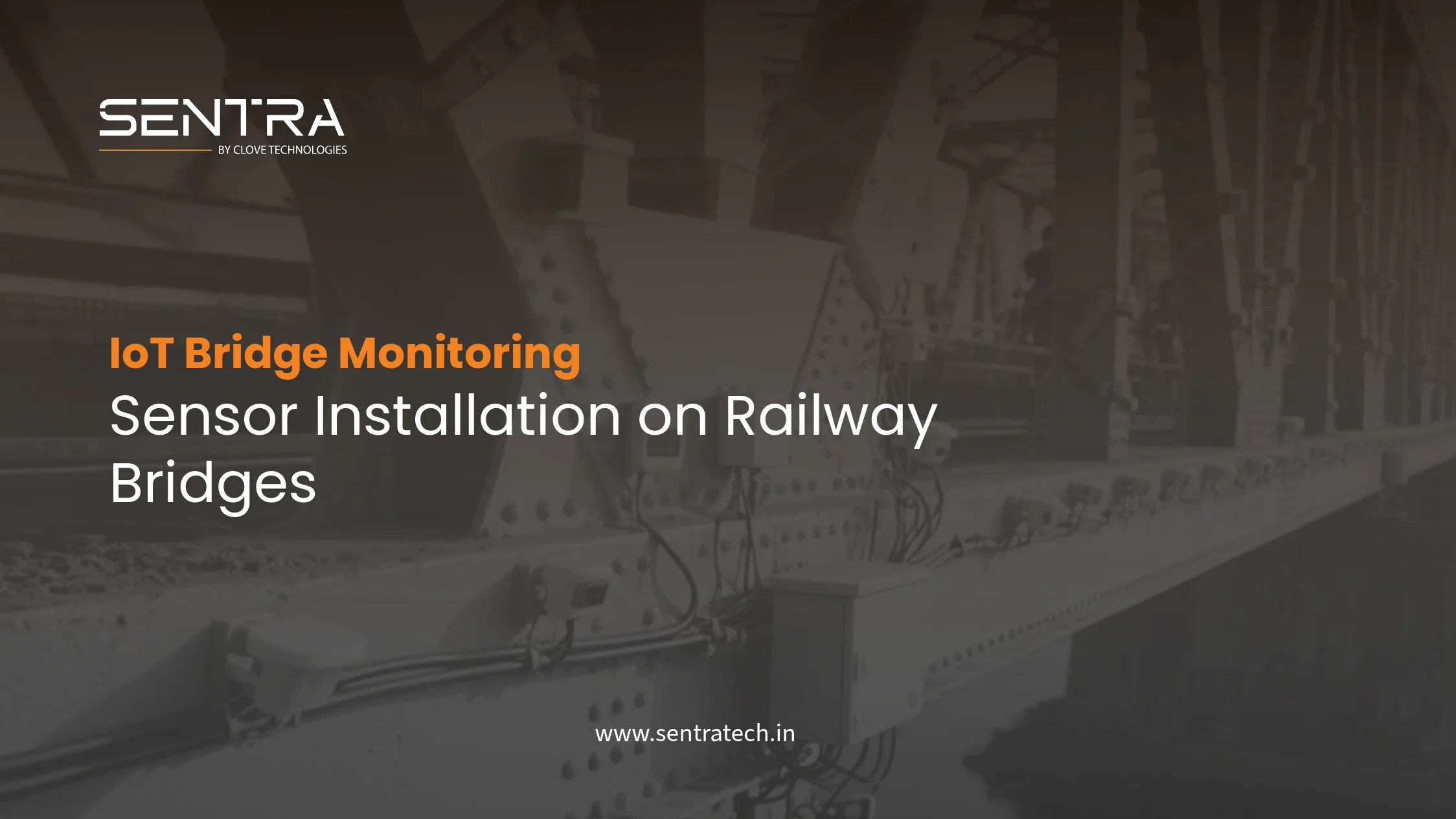
Railways and Tunnels: Railway bridge SHM is particularly demanding due to high-frequency dynamic loading from passing trains. Monitoring systems track rail girder vibration, pier tilt (resolution 0.001°), and track geometry alignment using automated total stations. During tunnel boring in congested urban corridors, real-time ground movement monitoring with convergence arrays and surface settlement markers keeps deformation within the ±25 mm limit — protecting buildings and utilities above the tunnel alignment.
Benefits of IoT-Based Structural Health Monitoring
- 24/7 Real-Time Visibility — Unlike periodic inspections that capture a single snapshot, SHM provides continuous data streams that reveal progressive deterioration trends. A 2026 Springer Nature study demonstrated that IoT-based SHM frameworks using low-cost ESP32 sensors and machine learning achieved reliable anomaly detection with F1-scores of 0.69, validating affordable continuous monitoring.
- Data-Driven Decision Making — Machine learning models (Random Forest, SVM, Isolation Forest) analyze vibration signatures, strain histories, and environmental correlations to distinguish normal operational variations from genuine damage indicators — reducing false alarm rates and improving diagnostic confidence.
- Predictive Maintenance Scheduling — Real-time rainflow counting of stress spectra combined with Palmgren-Miner damage accumulation rules provides continuously updated fatigue life estimates, enabling maintenance to be scheduled during planned traffic windows rather than emergency closures.
- Reduced Lifecycle Costs — McKinsey research indicates that predictive maintenance strategies enabled by IoT monitoring reduce maintenance costs by 10–40%, reduce unplanned downtime by up to 50%, and extend asset life by 20–40% compared to reactive or time-based maintenance approaches.
- Improved Public Safety — Automated threshold monitoring with SMS/email alerts provides instant notification when structural parameters exceed safe limits, enabling rapid traffic restriction or evacuation before visible damage becomes apparent.
Challenges in Implementing SHM Systems
- Power Management — Remote sensors on large structures like suspension bridges or dams must operate on battery or energy harvesting (solar, vibration) for 5–10 years without maintenance. Edge computing reduces transmission energy by processing data locally and transmitting only anomalies, but requires careful hardware-software co-design.
- Data Volume and Management — A 100-sensor bridge sampling at 100 Hz generates approximately 864 million data points per day. Event-driven data management strategies — transmitting raw data only during significant events and statistical summaries during normal operation — reduce cloud storage requirements by 80–90% while preserving the information needed for damage assessment.
- Interoperability — Sensor networks from different manufacturers often use proprietary protocols and data formats. Industry standards like IEEE 1451 (smart transducers), OGC SensorThings API, and IFC/BIM integration frameworks are emerging but not yet universally adopted, creating integration challenges for multi-vendor deployments.
- Environmental Compensation — Temperature variations can cause natural frequency shifts of 5–10% that mask damage-induced changes of 1–2%. Robust SHM systems require regression-based or machine learning temperature compensation models to separate environmental effects from structural damage indicators.
- Cybersecurity — Connected sensor networks on critical infrastructure are potential targets for cyberattacks. Encryption (TLS 1.3), authentication, and network segmentation are essential for production SHM deployments on public infrastructure.
Conclusion: The Future of Infrastructure
The next evolution of SHM lies in integrating Digital Twin technology — creating a virtual replica of infrastructure that mirrors its real-world performance. By combining IoT data, AI analytics, and 3D visualization, digital twins allow engineers to simulate stress, predict deterioration, and plan rehabilitation strategies more effectively.
Contact us