Overview
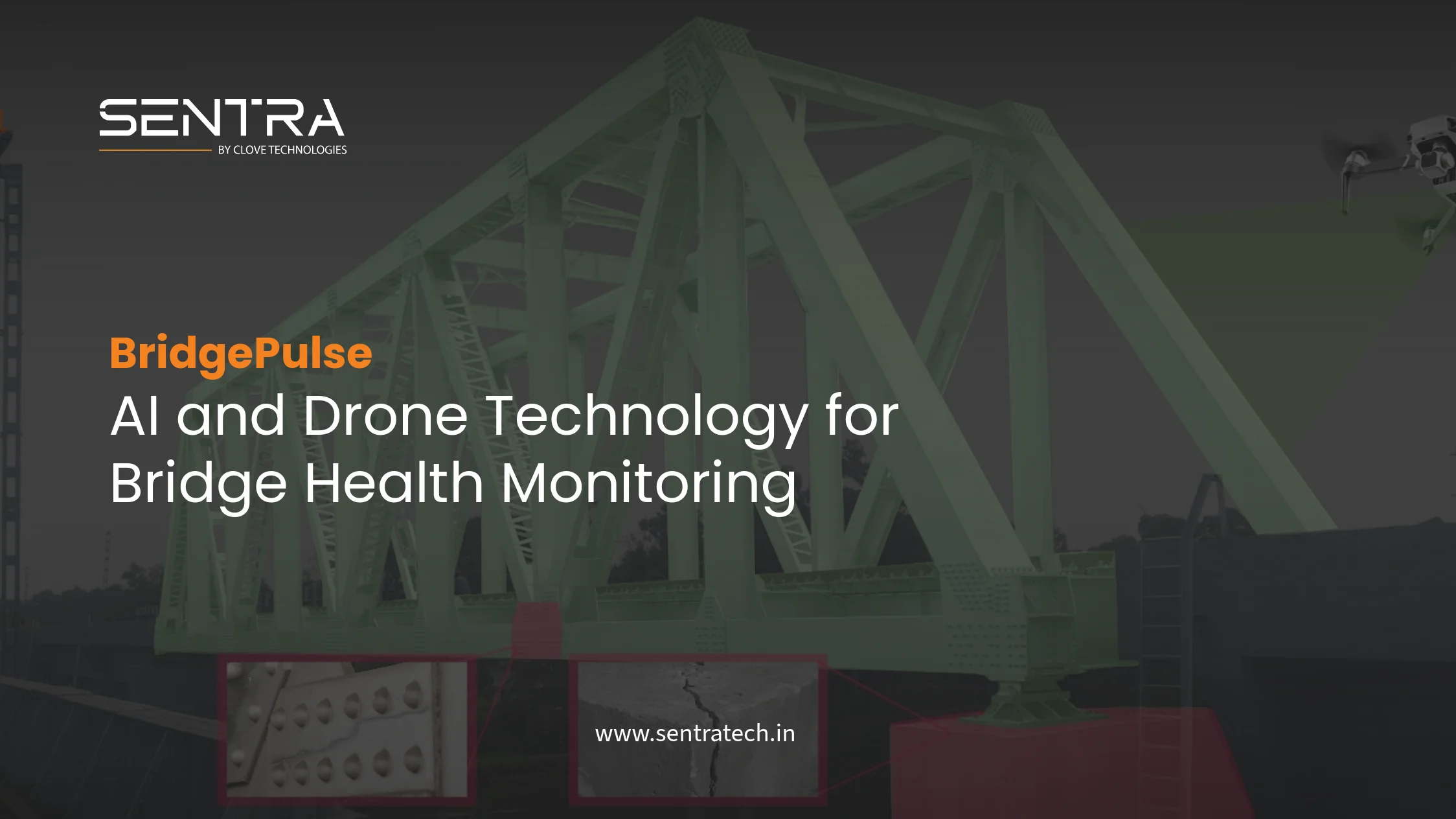
A crew inspecting a rural bridge in Andhra Pradesh can walk the span, photograph what looks suspicious, and still miss a hairline crack forming under a support column. That's the gap BridgePulse was built to close: an AI and drone-powered application that scans, analyzes, and monitors bridges across the state for Indian Railways, catching the damage a walkthrough inspection tends to miss.

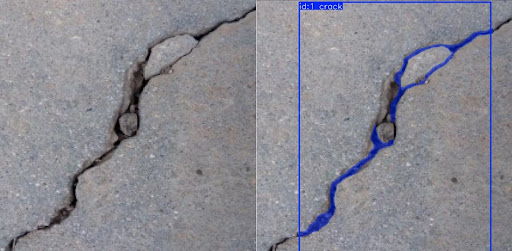
Beyond flagging that a crack or patch of rust exists, BridgePulse measures it: depth, width, and GPS location, pulled from photogrammetry and mesh data. Because each scan is stored and compared against the last one, maintenance teams can see whether a defect is stable or actively getting worse, which is the detail that actually drives a repair decision.
Infrastructure Monitoring Challenges
Rural and semi-urban bridge stock in India is aging and under constant environmental stress, and the standard response (a person walking the structure with a checklist) simply wasn't built to catch micro-cracks or rust hidden behind cladding. When that kind of damage goes unnoticed, the cost shows up later as an emergency repair, a service disruption, or worse. Indian Railways needed something more precise and more repeatable than what a manual inspection could offer.
Objectives
- Cover bridge inspection at state scale rather than one structure at a time
- Detect early signs of structural deterioration with high precision
- Give maintenance planners measurements they can act on
- Keep scans comparable so degradation shows up between visits
Methodology and System Design
The approach pairs drone-based scanning with AI and ML models trained specifically to read bridge conditions. A drone flies the structure capturing high-resolution 2D and 3D data, which gets reconstructed into mesh and photogrammetry models. From there, the system picks out:
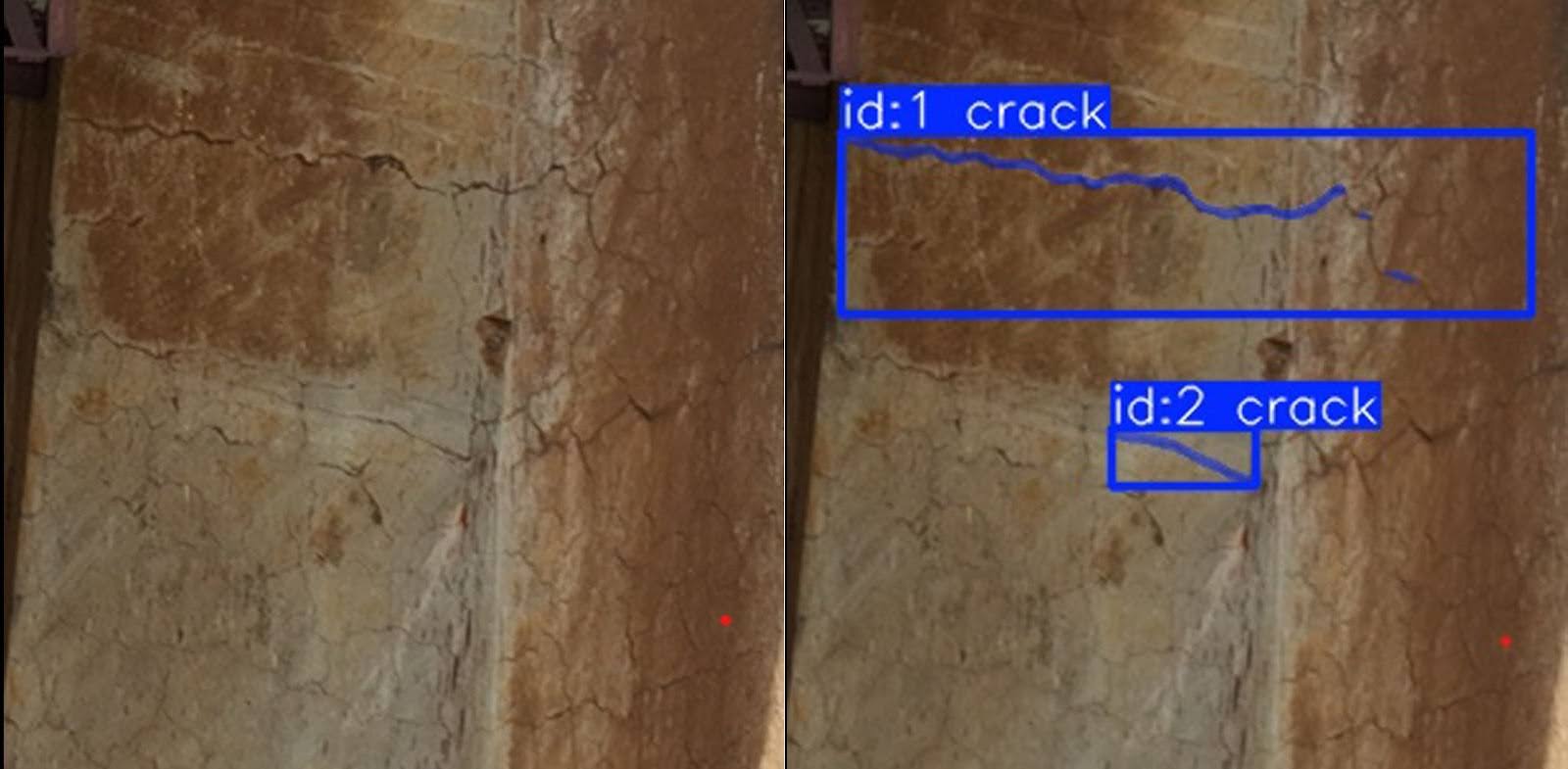
- Cracks, with depth and width estimated from photogrammetry
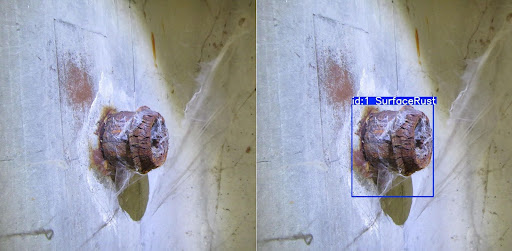
- Rust and corrosion on metal components
- Deviations from the original design or from the previous scan
- Overlays that map detected cracks and rust onto the 3D model
- Time-series comparison across scans taken months apart
System Architecture
Data Acquisition Layer
High-resolution drone scans capture 2D and 3D data of bridge surfaces. Mesh and photogrammetry models are generated from aerial data using specialized reconstruction algorithms.
Processing Layer
AI/ML models trained on structural defect datasets perform image segmentation and object detection using Convolutional Neural Networks (CNNs) for crack and rust identification. Depth estimation algorithms classify structural severity, while measurement tools calculate distances, crack dimensions, and elevation data.
Analytics and Reporting
Every defect gets a health risk category of Low, Moderate, or Critical, and inspection reports export from there. The working feature set is drone scanning with photogrammetry, crack and rust detection with severity metrics attached, deviation detection between the historical and the current scan, and side by side comparison views for tracking change over time.
Use Case Scenario
A maintenance engineer opens the BridgePulse dashboard and clicks a bridge in East Godavari district on the map. The latest photogrammetry model loads with the crack and rust overlays on it. Checking rust severity, they notice the crack on the left support column is 2 mm deeper than it was in the scan six months earlier. They export the PDF report with the measurements and send it to the Public Works Department, and preventive maintenance gets scheduled before the crack becomes a safety problem.
Implementation Challenges
A few things caused trouble during development and deployment:
- The model occasionally read fungus, stains, or shadows as cracks. Shadow filtering algorithms and better training data brought that down.
- Training needed large labelled datasets of bridge defects, gathered across the range of environmental conditions found in Andhra Pradesh.
- Poor light and unstable drone flight in high wind both degrade scan quality. A stronger image processing pipeline handles most of that.
Future Scope and Enhancements
- Machine learning regression over the historical scan data, to forecast how a given defect will progress
- Fully automated drone missions for routine inspections, with minimal human oversight
- Direct reporting into government dashboards and smart city frameworks
- Extending scanning and monitoring to bridges in other Indian states
What BridgePulse really changes is timing. Instead of learning about a crack when it's already a safety concern, engineers see it forming and can plan a repair on their own schedule. As Andhra Pradesh's bridge stock keeps aging, that head start is what keeps a maintenance backlog from turning into a closure notice.
See BridgePulse on Your Bridges
If you maintain bridge stock and want to know what a scan would actually show, get in touch and we will walk you through it.
Contact usProject developed by Clove Technologies for Indian Railways. Content and images sourced from CloveTech for reference purposes.