
G7 Vibrating Wire RCR Data Logger
Ultra-robust wireless data logger with internal antenna, designed to be embedded in precast concrete. Measure real-time stress and strain in tunnel linings and concrete segments — starting from the manufacturing stage.
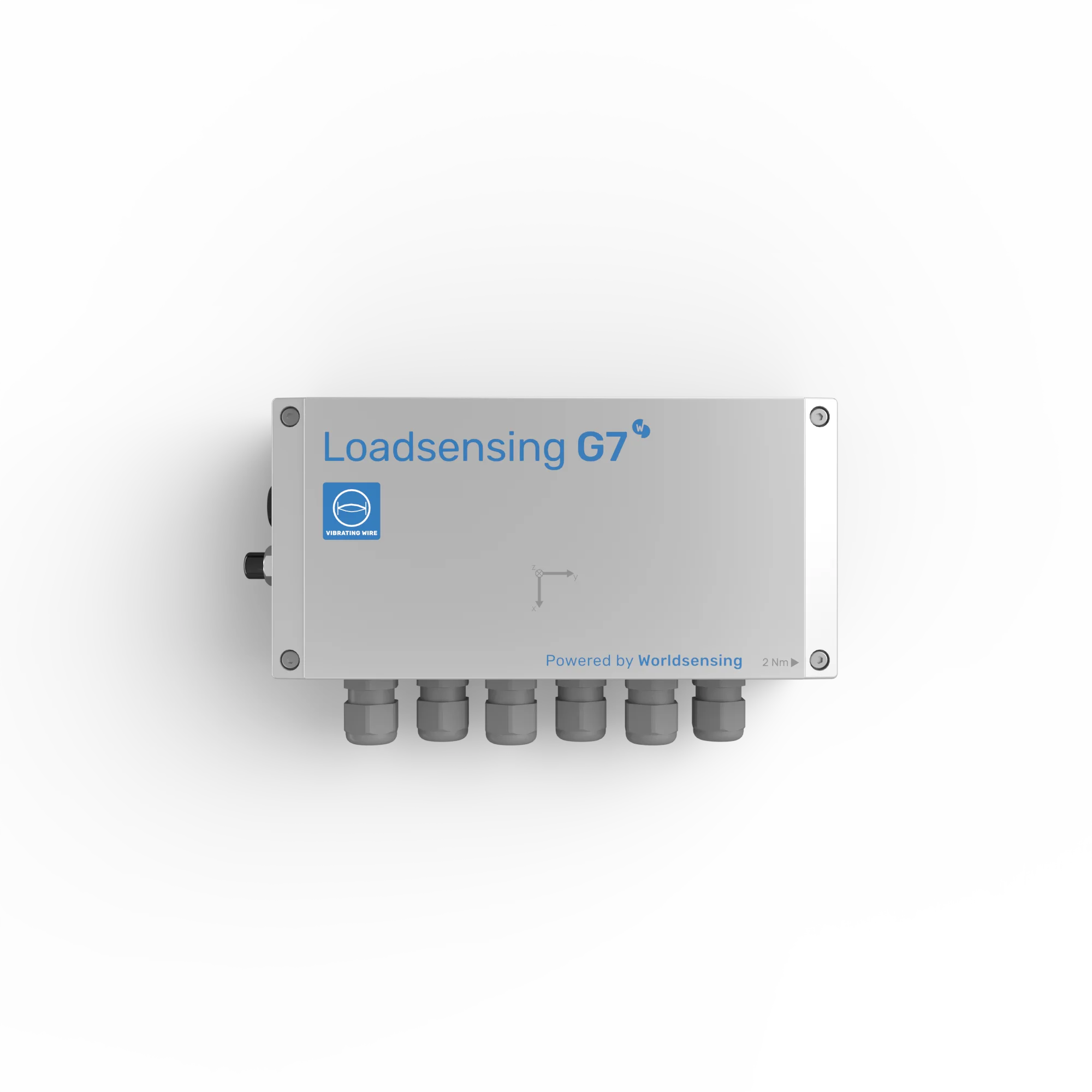
6-Channel VW RCR
Model: LSG7VW-6IL0-RCR
Internal Antenna — Embed in Concrete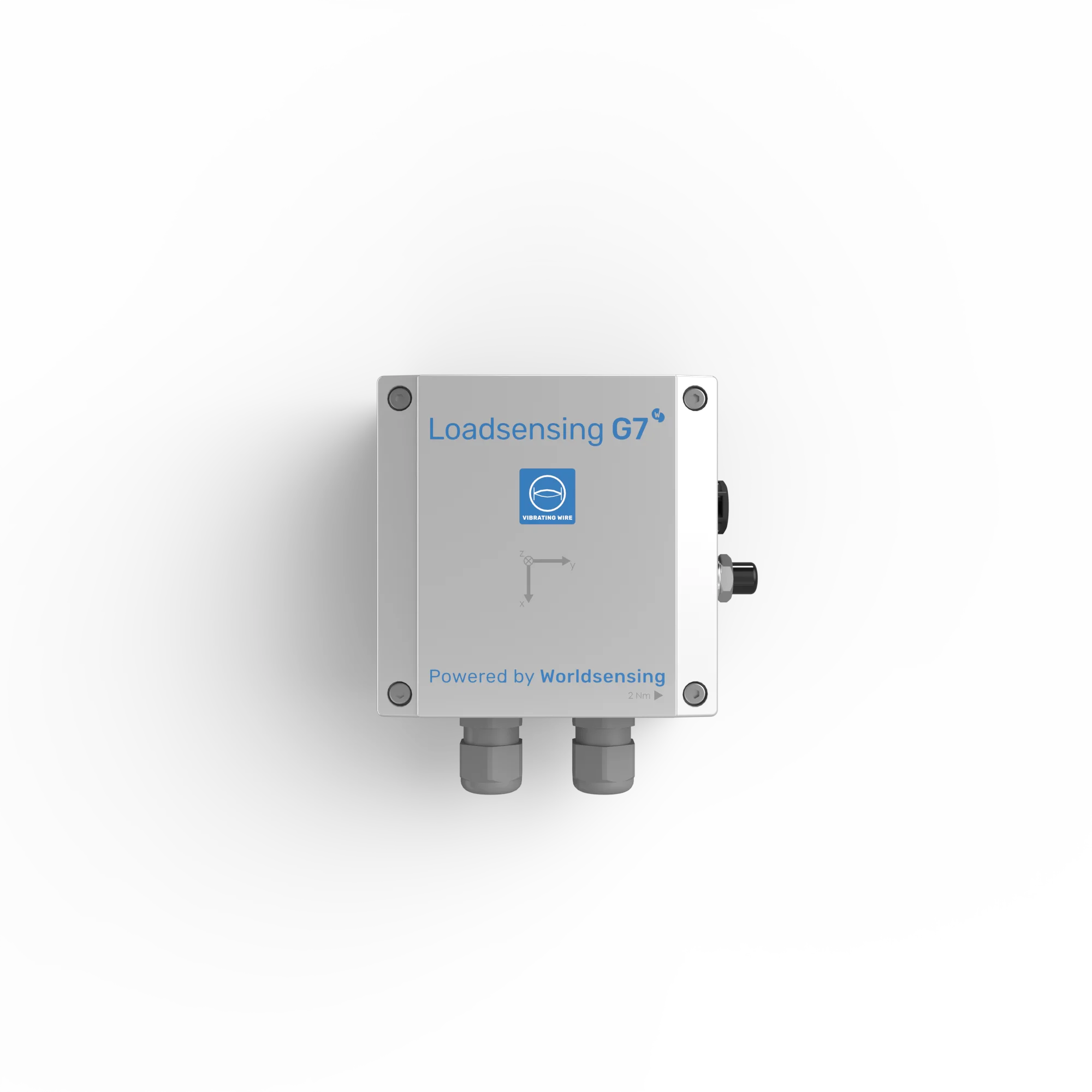
2-Channel VW RCR
Model: LSG7VW-2IL0-RCR
Internal Antenna — Embed in ConcreteEmbedded Intelligence for Concrete Infrastructure
The G7 Vibrating Wire RCR is a robust, wireless data acquisition device designed for long-term monitoring of concrete and structural assets. It continuously records stress, strain, and pressure from vibrating wire sensors, providing real-time insights without manual readings.
With an ultra-robust internal antenna design, the RCR variant is purpose-built to be embedded in precast concrete segments, making it the ideal choice for tunnel lining monitoring and underground construction projects.
Internal antenna for precast concrete encapsulation
On-device data validation & threshold alerts
73,500 reading capacity, secure storage
Low-latency anomaly detection, fewer false positives
What Makes the G7 VW RCR Different
Purpose-built for embedding in precast concrete with edge intelligence and long-range wireless connectivity.
Embeddable in Concrete
Internal antenna design makes it ideal for encapsulation in precast concrete segments. Ultra-robust casing withstands the casting process and long-term embedment.
Ultra-Long Battery Life
Up to 22.7 years at 1-hour reporting, exceeding 25 years at 6-hour intervals. User-replaceable 3.6V D-size LSH20 Li-SOCl2 battery cell.
IP68 Rated & Rugged
Industrial-grade IP68 enclosure for full submersion protection. Operating range from −40°C to +80°C — survives the harshest construction environments.
Universal Sensor Compatibility
Compatible with all leading vibrating wire sensor manufacturers. Reads sensors from 300 to 7000 Hz — covering virtually all geotechnical VW sensors.
Cloud & Edge Management
Configure locally via CMT Edge for single-network deployments, or connect to CMT Cloud for multi-project, multi-network oversight from anywhere.
Mobile App Configuration
Wireless Bluetooth setup via Worldsensing App. USB-C connector also available for direct configuration. No laptop needed in the field.
G7 Vibrating Wire RCR Specifications
| Input Types | Vibrating wire and thermistor per channel |
|---|---|
| Device Variants | 6, 2 channel (RCR) with internal antenna |
| Memory | 73,500 readings (5-channel logging) |
| Power Source | 3.6V D-size LSH20 Li-SOCl2 battery cell |
| Operating Temperature | −40°C to +80°C |
| Weather Protection | IP68 |
| System Configuration | Worldsensing App (Bluetooth) • CMT Edge • CMT Cloud |
| Detailed Sensor Specifications | |||||||||||||||||||||||||||||||||||||||
|
Range: 300–7000 Hz
Accuracy: 0.008–0.013%
Temp: −40°C to +80°C
|
At 1 hr reporting:
VW 6X 15.9 yrs
VW 2X, 1X 13.6 yrs
VW 6X (TMM) 14.5 yrs
|
|||||||||||||||||||||||||||||||||||||||
Need the full technical details?
Complete specs, diagrams, and compatibility info
Flexible Mounting for Any Environment
Choose the mounting configuration that best fits your deployment site.
Pole Mounting
Using aluminum plate WS-ACC-POLE-PL8 with 35 mm or 50 mm u-bolts for secure attachment to poles and posts.
Wall Mounting
Using external mounting brackets LS-ACC-MEC-MP (set of 2) for secure wall installation in tunnels and structures.
Horizontal & Surface Mounting
Using versatile plate LS-ACC-IN15-HP for horizontal and vertical surface deployment.
Got Questions About the G7 VW RCR?
Can't find what you're looking for? Contact our team — we're happy to help.
The G7 Vibrating Wire RCR is a wireless data acquisition IoT device with an internal antenna, designed for embedding in precast concrete. It collects data from vibrating wire sensors and transmits it using long-range, low-power radio communications — ideal for tunnel linings and underground construction.
The RCR variant features an internal antenna instead of an external one, making it suitable for encapsulation in precast concrete. It's also more compact and rugged, designed specifically for embedding in concrete segments during manufacturing — ideal for tunnel lining monitoring where external antennas would be impractical.
The G7 VW RCR can be connected to all vibrating wire sensors on the market. It reads sensors working on the 0 to 7000 Hz frequency range, covering virtually all geotechnical vibrating wire sensors globally — including piezometers, strain gauges, pressure cells, load cells, crackmeters, and extensometers.
With a 1-hour reporting interval, the 5-channel RCR achieves up to 22.7 years of battery life. With a 6-hour interval, it exceeds 25 years. The device uses a 3.6V D-size LSH20 Li-SOCl2 battery cell that is user-replaceable without tools.
Yes. The RCR variant is specifically designed with an internal antenna and robust enclosure for direct embedment in precast concrete segments. It can withstand the casting process and provide long-term monitoring from within the concrete structure — perfect for tunnel segment lining monitoring from the manufacturing stage.
The radio range depends on the environment. In open sight, the range can reach up to 15 km (9.3 mi). In a city street, up to 4 km (2.5 mi). When placed in a manhole, up to 2 km (1.2 mi), and in a tunnel, it extends up to 4 km (2.5 mi). The RCR with internal antenna performs well even when embedded in concrete.