By merging data intelligence with physical assets, IoT transforms infrastructure from static to responsive. Every bridge, tunnel, pump house, and rail corridor becomes a self-reporting entity, continuously measuring stress, vibration, temperature, and environmental strain. These real-time insights empower decision-makers to act before failures occur, enabling safer, longer-lasting, and more sustainable infrastructure.
For decades, the standard way to know whether an asset was healthy was to send someone to look at it. Inspections happened on a calendar, not on demand, so the months between visits were effectively a blind spot. IoT closes that blind spot. A wireless sensor doesn't get tired, doesn't need scaffolding to reach a girder, and doesn't wait for a scheduled visit to notice that vibration levels have started drifting. It just reports: continuously, automatically, and the moment something changes.
Intelligent Infrastructure at the Edge
IoT is pushing intelligence closer to the source. Edge gateways process critical data streams locally, reducing latency and ensuring uninterrupted monitoring even in remote or bandwidth-limited locations. This distributed intelligence transforms passive structures into active participants in their own maintenance.
- Edge analytics nodes compute sensor data in milliseconds, allowing faster detection of stress anomalies.
- Local inference delivers predictive insights without relying on constant cloud connectivity, so alarms still fire during a network outage.
- Autonomous calibration routines maintain accuracy across thousands of field-deployed devices without a truck roll.
- Battery-optimised firmware lets remote sensor nodes operate for years on a single charge, critical for assets that are hard or dangerous to reach.
From Sensors to Decisions: How the IoT Stack Connects
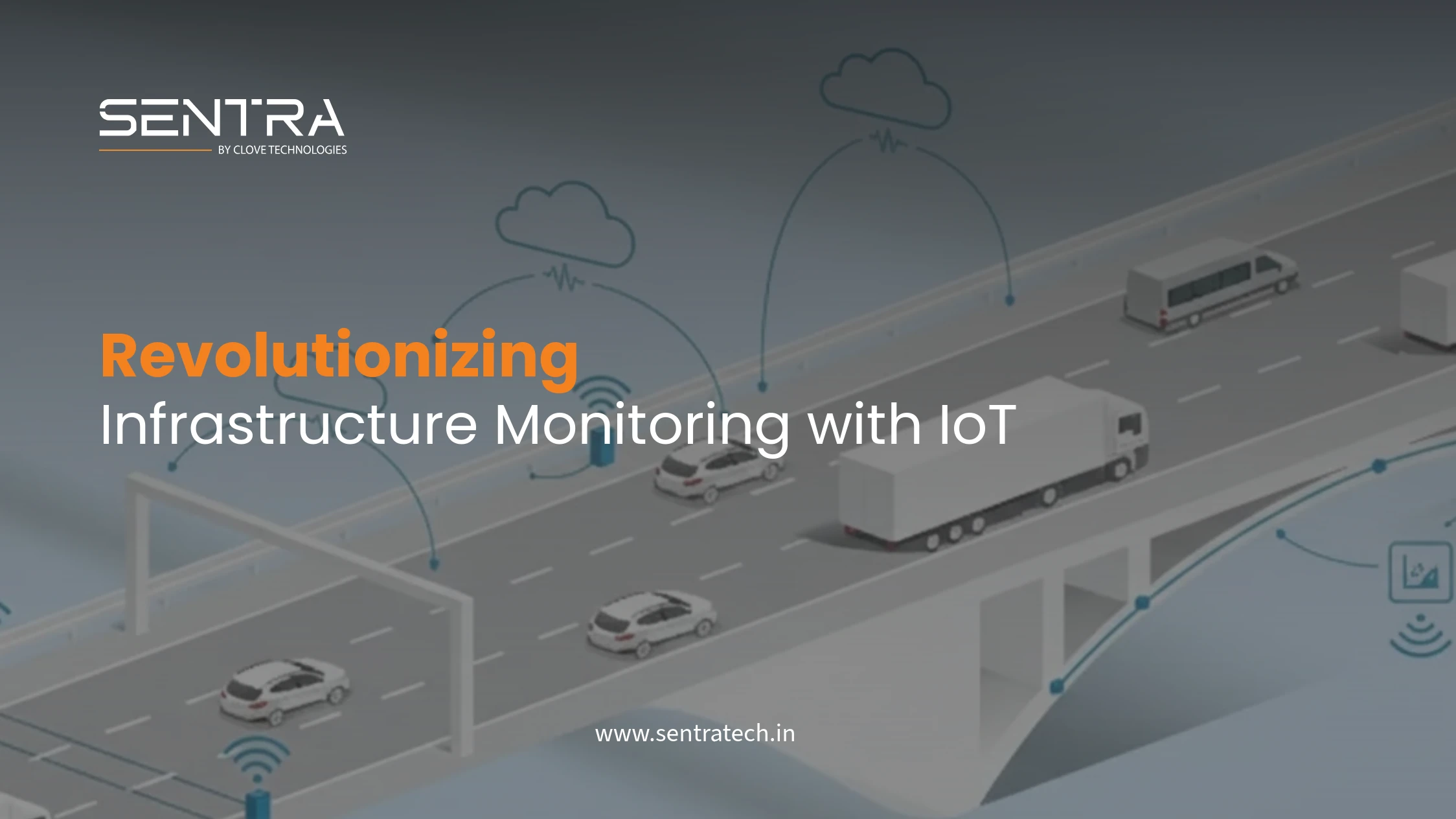
A single sensor reading is just a number. What makes it useful is the chain that carries it from the field to a decision: sensor → edge gateway → wireless network → cloud data platform → dashboard → alert → action. Each link matters. A vibration sensor on a bridge girder is only as good as the gateway that can reach it in a remote span, the network that can carry the reading without a costly data plan, and the analytics layer that knows what "normal" looks like for that specific girder.
The value of IoT infrastructure monitoring isn't the sensor: it's the chain of custody the data travels through, from a raw reading in the field to a decision on someone's desk.
This is also why IoT and Digital Twin technology are increasingly discussed together rather than as separate topics. The sensor network supplies the live data; the twin is where that data gets interpreted against the asset's design and history, so an engineer sees not just a number but what that number means for the structure. AI is advancing this further — our article on AI infrastructure monitoring covers how machine learning transforms raw sensor streams into predictive insights.
Digital Twins: Virtual Mirrors of Reality
Digital twins provide engineers with a continuously updated, virtual reflection of the physical world. When combined with IoT data, they enable simulations, scenario testing, and proactive interventions long before real-world issues surface.
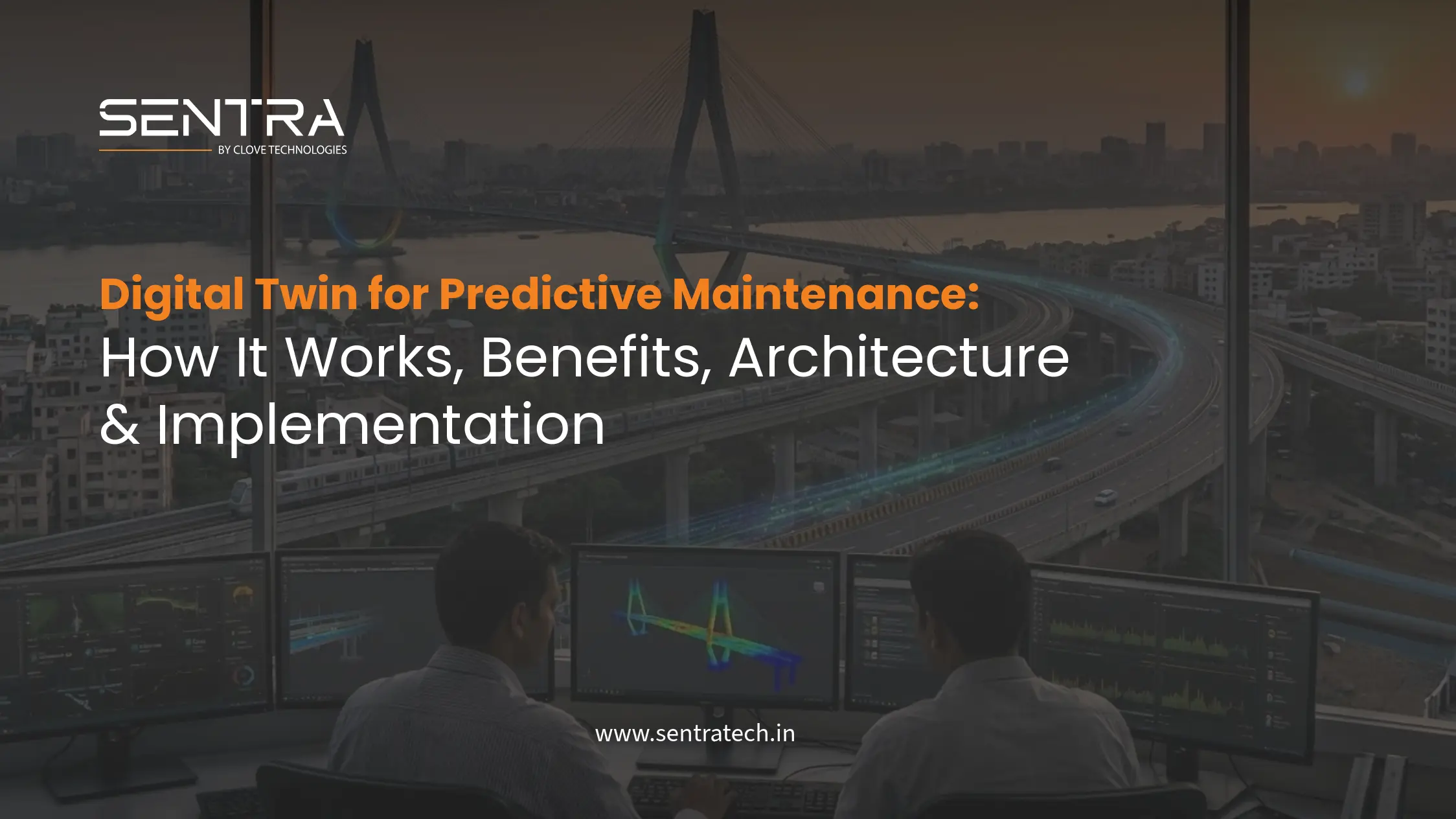
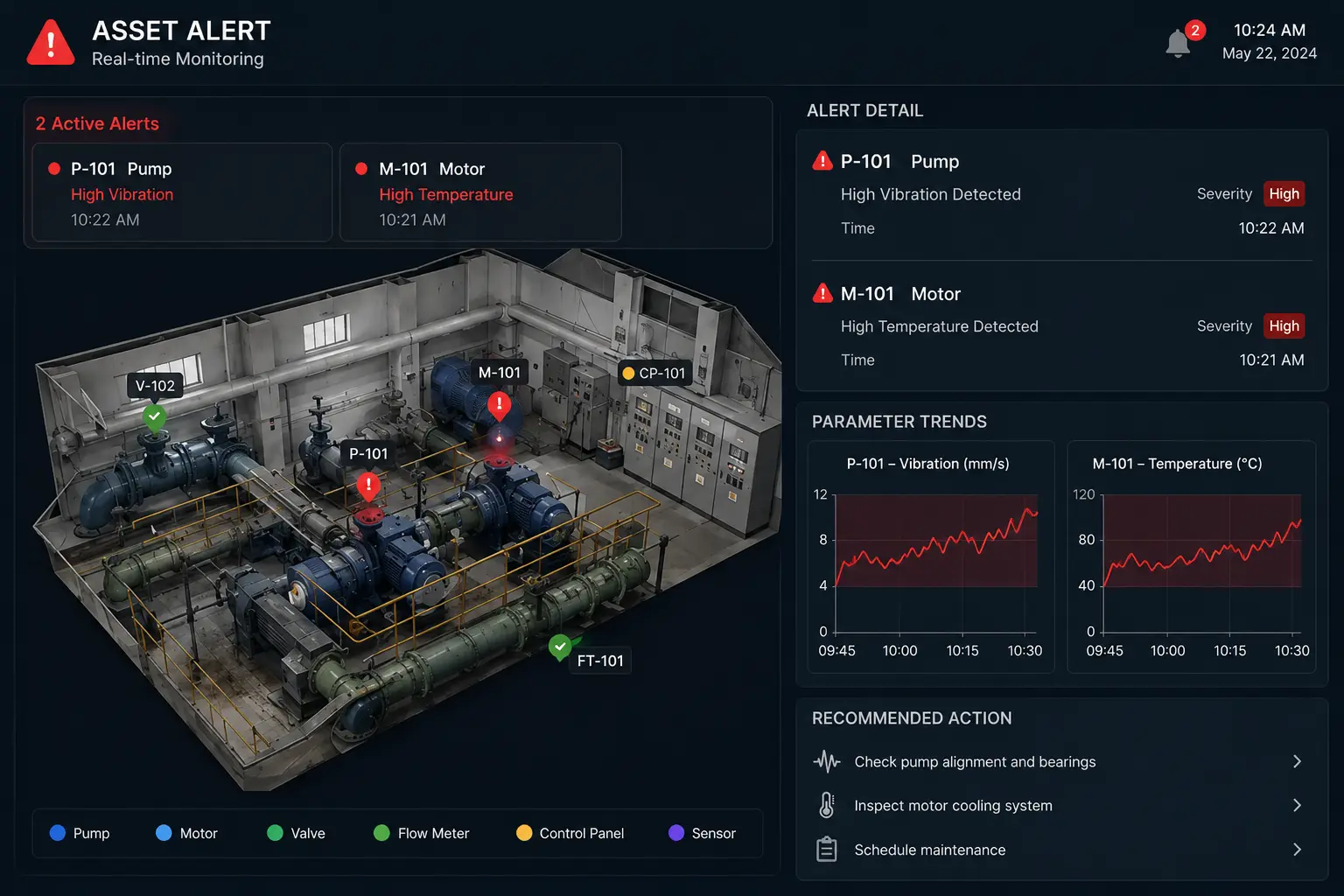
3D modeling environments now replicate real-world infrastructure conditions with remarkable precision, continuously updated through live sensor inputs. These digital replicas enable engineers to simulate load, vibration, and environmental changes in real time, revealing potential vulnerabilities before they occur. Integrated lifecycle management dashboards bring all performance data into a unified view, empowering predictive maintenance and long-term asset optimization.
Why the Twin Matters More Than the Chart
A line chart tells you a value went up. A digital twin tells you which pump, which girder, or which valve that value belongs to, and lets you see it in context, alongside the asset's history, its neighbours, and its design tolerances. That context is what turns an alert into a decision.
Real-World Impact: Where This Is Already Working
This shift is not theoretical. IoT-enabled monitoring is already running on live infrastructure across several asset classes:
- Bridges: continuous structural health monitoring combined with AI and drone inspection, as demonstrated in Sentra's BridgePulse deployment, flags deterioration long before it becomes a safety issue.
- Railways: wireless sensor networks installed across railway bridges give a small engineering team live visibility over assets spread across an entire network, without a site visit for every check.
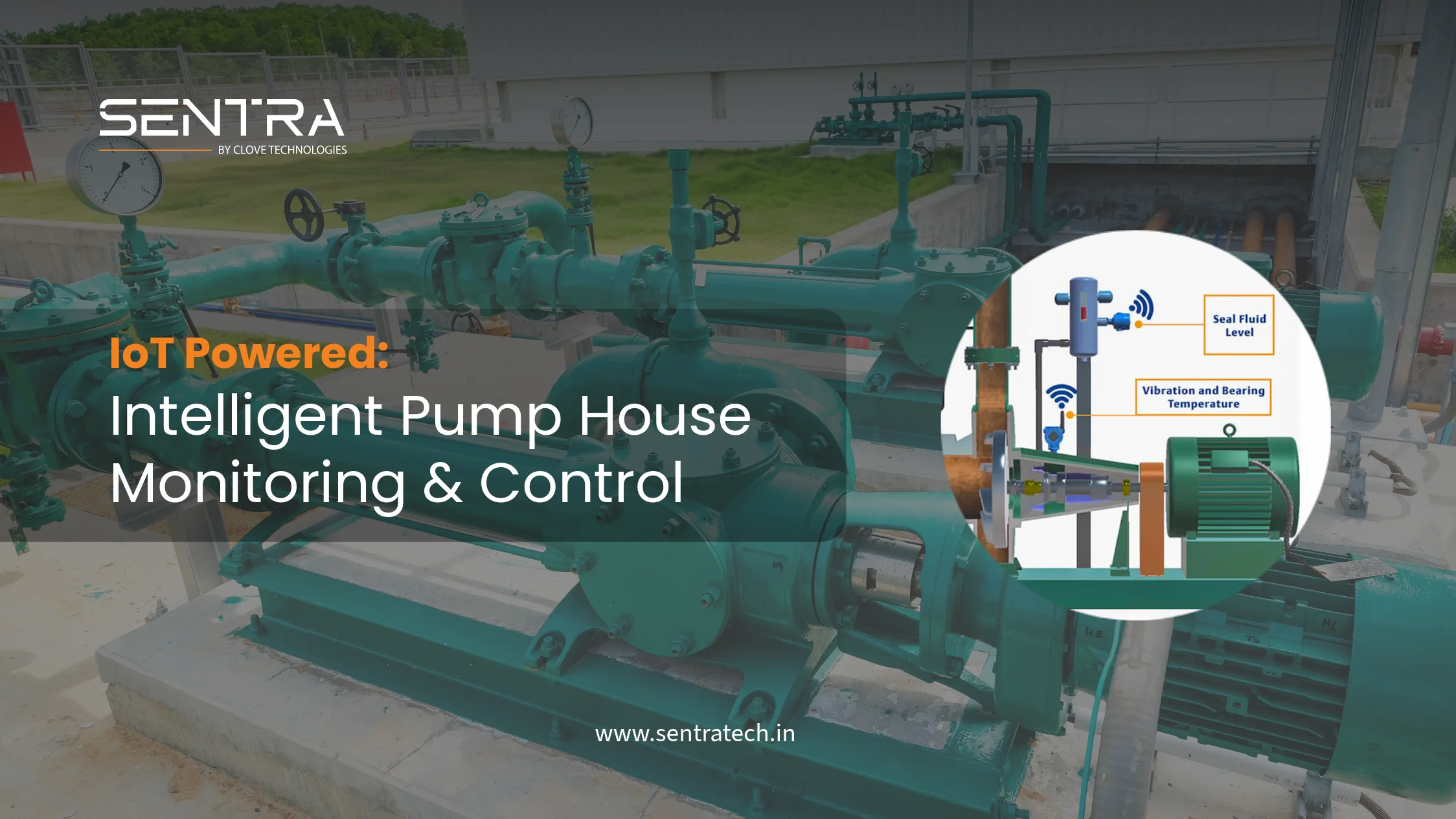
- Pump houses and industrial equipment: vibration and temperature monitoring on rotating equipment turns unplanned breakdowns into scheduled maintenance windows.
- Smart cities: connecting asset monitoring data across water, transport and public infrastructure gives planners a single, current view of city-scale asset health.
The common thread across all four is the same loop: sense, transmit, analyse, act, and feed the outcome back in so the system gets sharper with every cycle.
Transform Your Infrastructure with IoT
Ready to move from reactive to predictive maintenance? Connect your infrastructure with real-time IoT monitoring and digital twin capabilities.
Contact us