
India alone operates over 1.5 lakh bridges, many of them crossing the 50-year mark. The Morbi cable-stayed bridge collapse in Gujarat (2022), which killed 135 people, exposed a harsh reality: visual inspections missed critical cable fatigue for years. Globally, the American Society of Civil Engineers (ASCE) assigns U.S. infrastructure a C-minus grade, estimating a $2.59 trillion investment gap over the next decade. Traditional manual inspections (periodic, subjective, and limited in scope) simply cannot keep pace with the scale and speed of structural degradation happening beneath the surface.
Real-time monitoring solutions close this gap by giving structures a continuous voice. Instead of relying on a once-a-year walk-through, engineers now receive streaming sensor data that captures stress, vibration, temperature, and displacement in real time, enabling them to detect anomalies hours, days, or even months before they become visible to the human eye.
What Are Real-Time Monitoring Solutions?
A real-time structural monitoring system is an integrated architecture of sensors, edge processors, communication networks, and analytics platforms that continuously measures a structure's physical behavior and streams data to engineers and decision-makers. Unlike periodic inspections, these systems operate 24/7, capturing every load cycle, thermal expansion event, and vibration response as it happens.
The core stack typically consists of four layers: (1) Sensing Layer: strain gauges, accelerometers, tiltmeters, temperature probes, and ultrasonic transducers embedded at critical structural points; (2) Edge Layer: local microcontrollers (such as ESP32 or industrial DAQ units) that sample data at configurable rates (10 Hz to 1 kHz), perform on-site filtering, and trigger local alerts when thresholds are breached; (3) Communication Layer: LPWAN protocols like LoRaWAN (10 km range, <1 mW power), 5G NR for high-throughput applications, or NB-IoT for deep indoor penetration; and (4) Analytics Layer: cloud or hybrid platforms where machine learning models run FFT analysis, modal identification, and anomaly detection on incoming data streams.
A 2026 study by Springer Nature demonstrated a real-time SHM framework using low-cost ESP32 microcontrollers and smartphone MEMS accelerometers that achieved a 69% F1-score on anomaly detection, validating that affordable IoT hardware can deliver engineering-grade monitoring when paired with smart algorithms like Isolation Forest and Z-score thresholding.
Advanced NDT & Non-Invasive Testing
Non-destructive testing (NDT) has evolved far beyond simple hammer-tap inspections. Modern NDT technologies allow engineers to "see inside" concrete and steel without causing any damage, detecting defects that are invisible on the surface.
- Ultrasonic Pulse Echo (UPE): Generates high-frequency sound waves (50 kHz to 2 MHz) that travel through concrete and reflect off internal voids, delaminations, and reinforcement. By measuring the time-of-flight of reflected echoes, engineers map crack depths with millimeter accuracy. A typical bridge deck survey can cover 500 m² in a single day using air-coupled UPE arrays.
- Ground Penetrating Radar (GPR): Transmits electromagnetic pulses (200 MHz to 2.6 GHz) into concrete to detect rebar location, corrosion-induced delamination, and concrete cover thickness. GPR can scan at walking speed (5 km/h) and penetrate up to 600 mm in reinforced concrete, producing real-time cross-sectional images of subsurface conditions.
- Infrared Thermography (IRT): Passive IRT captures surface temperature differentials caused by subsurface defects. During thermal cycling (morning sun heating a bridge deck), delaminated areas heat faster than bonded concrete, creating detectable thermal anomalies as small as 0.3°C. Active IRT uses external heat sources for controlled assessments of building envelopes and tunnel linings.
- Laser Scanning / LiDAR: Generates point clouds with ±2 mm accuracy at distances up to 300 m, enabling precise 3D deformation monitoring. By comparing scans taken months apart, engineers detect millimeter-scale settlement, lateral displacement, and progressive deflection in bridges and high-rises.
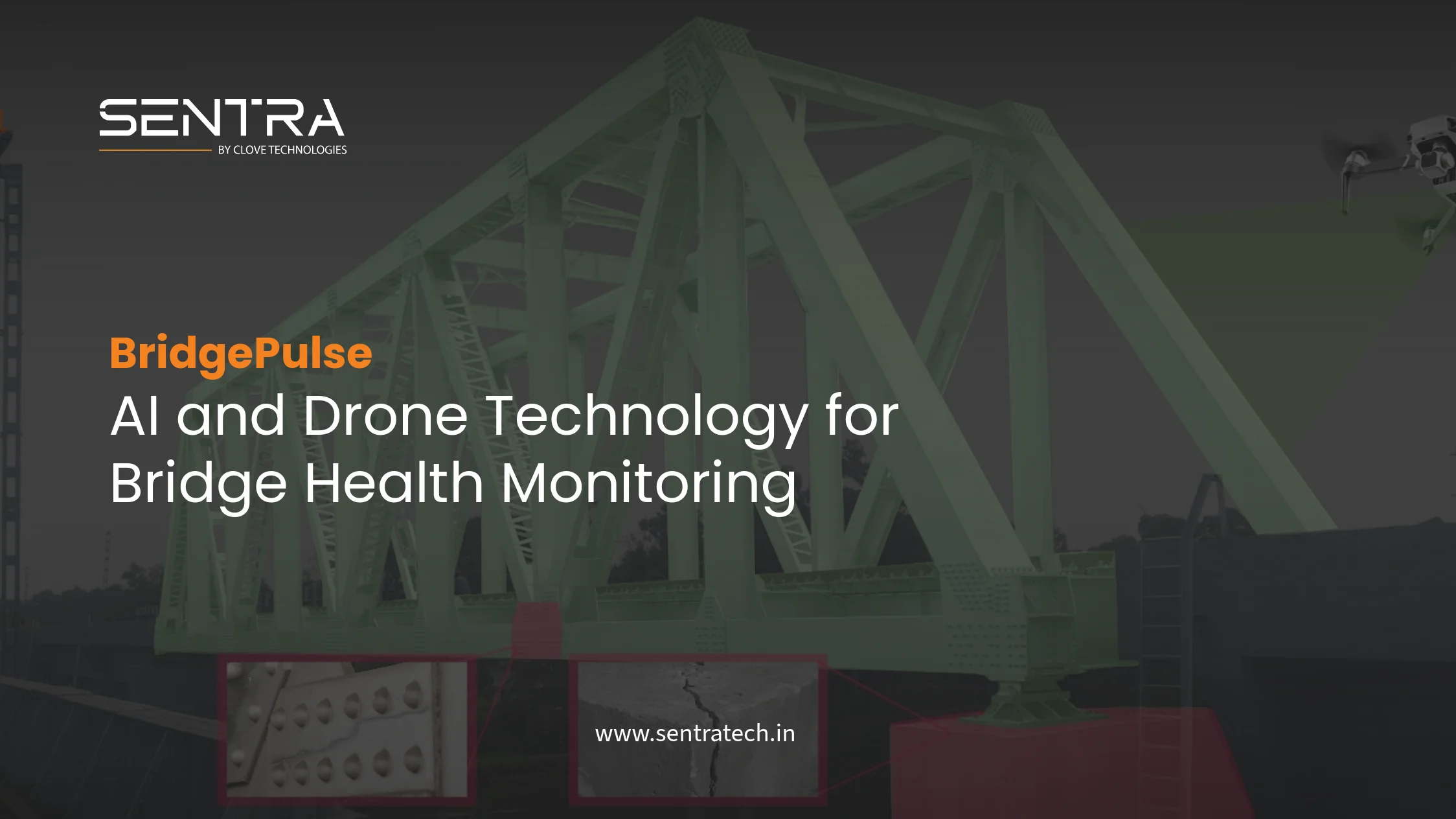
- Drone-Based Photogrammetry: UAVs equipped with RTK-GPS and 42 MP cameras create centimeter-resolution 3D models of structures in hard-to-reach areas (bridge soffits, dam faces, chimney stacks), eliminating the need for rope access or scaffolding. AI-powered crack detection algorithms process these models to automatically map, measure, and classify surface defects.
Bridge Inspection: Smart Diagnostics in Practice
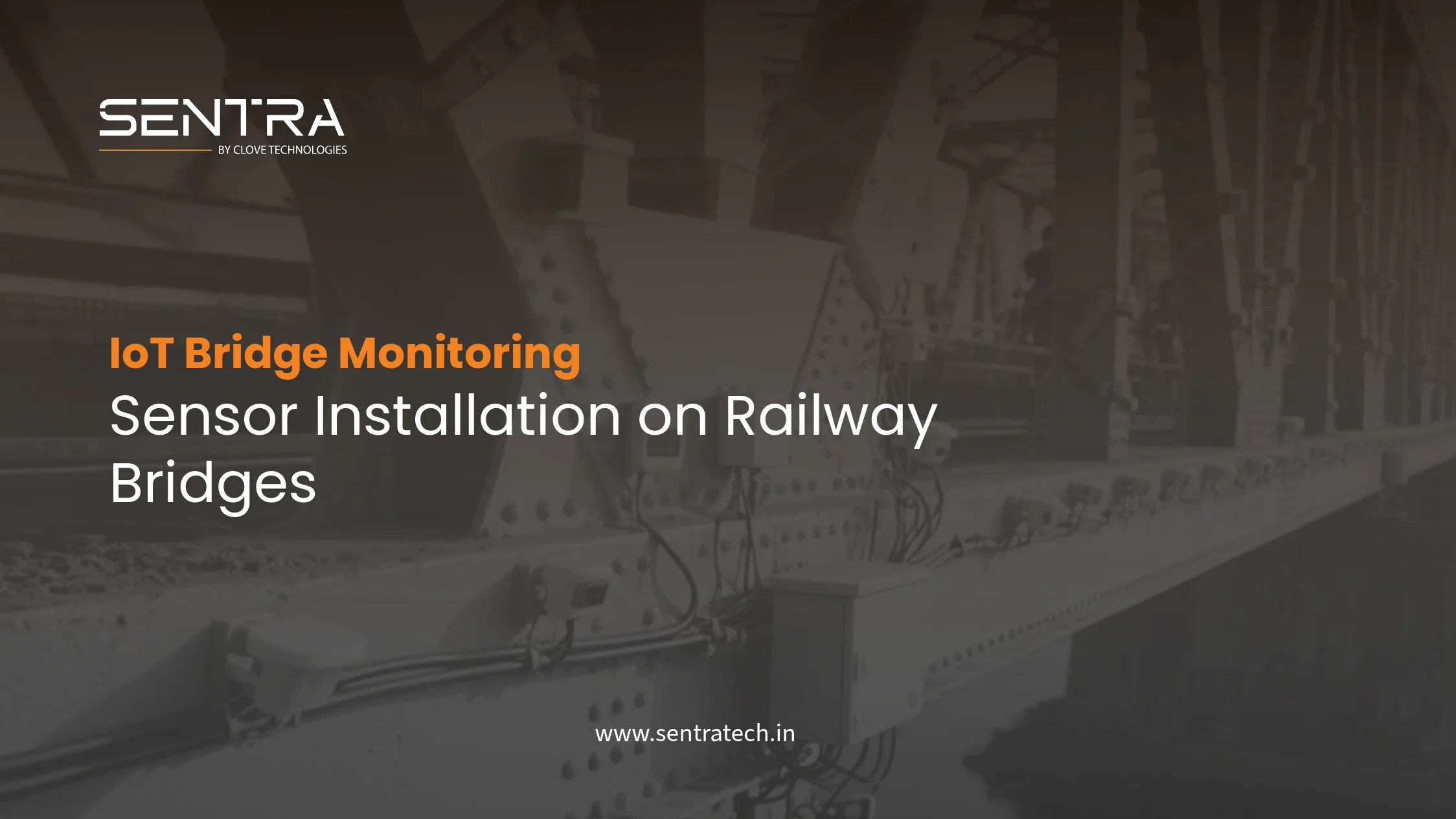
Bridges face a unique combination of dynamic traffic loads, thermal cycling, wind-induced vibration, and corrosion from de-icing salts or marine environments. A real-time monitoring deployment on a highway overpass might include: MEMS accelerometers (sampling at 100 Hz) on girders to track natural frequency shifts that indicate stiffness loss; fiber Bragg grating (FBG) strain sensors on weld toes to measure live-load stress ranges; GNSS antennas on deck spans for sub-millimeter displacement tracking; and temperature-humidity sensors to correlate environmental effects with structural response.
Consider the I-35W Mississippi River bridge in Minneapolis, which collapsed in 2007 killing 13 people. Post-collapse analysis found that gusset plates were 50% undersized, a flaw that continuous strain monitoring would have detected years before failure. Today, the replacement bridge operates with over 500 sensors streaming real-time data, automatically flagging any stress reading that deviates from the structural model's predictions.
AI-powered crack mapping using drone photogrammetry combined with GPR scanning can identify surface crack widths as narrow as 0.1 mm and subsurface delamination invisible to the eye. When these NDT techniques are paired with continuous IoT sensor streams, bridge owners gain a complete diagnostic picture: both the current condition and the rate at which it is changing.
Asset Monitoring: Lifecycle Management at Scale
Infrastructure assets like power plants, refineries, and industrial facilities represent billions of dollars in capital investment. A single unplanned shutdown in an oil refinery can cost $5 million to $10 million per day. Real-time asset monitoring shifts maintenance from reactive (fix when broken) to predictive (fix before it breaks), using continuous sensor data to forecast remaining useful life.
IoT-enabled asset monitoring tracks wear progression on rotating machinery using vibration analysis (tracking overall RMS velocity, crest factor, and bearing defect frequencies), monitors corrosion rates using electrochemical noise probes and ultrasonic thickness gauges, and predicts fatigue crack growth using Paris' Law models fed by real-time strain data. A typical deployment reduces unplanned downtime by 30% to 50% and extends equipment life by 20% to 40%, according to McKinsey research on industrial IoT ROI.
Engineering Consulting & Monitoring Strategy
Deploying sensors without a strategy wastes resources. Effective monitoring consulting begins with a structural vulnerability assessment: identifying fatigue-critical details, corrosion-prone zones, and load-path bottlenecks through FE modeling and code review. This is followed by sensor placement optimization using sensitivity analysis to ensure maximum damage detectability with minimum sensor count. The consulting team then develops alarm thresholds calibrated to the structure's specific load history and environmental exposure, and establishes a data management protocol that defines sampling rates, storage requirements, retention policies, and escalation procedures for anomaly events.
Geotechnical Monitoring: Below-Ground Intelligence
Structures are only as stable as their foundations. Geotechnical monitoring uses vibrating wire piezometers (accuracy ±0.1 kPa) to track pore-water pressure in dam abutments, in-place inclinometers (resolution 0.001 mm/m) to detect slope creep in embankments, and settlement cells to monitor foundation performance under new construction loads. During metro tunnel boring in cities like Mumbai and Delhi, real-time ground movement monitoring with automated total stations and in-ground extensometers keeps surface settlement within the 25 mm limit set by urban rail authorities, protecting buildings, utilities, and roads above the tunnel alignment.
Structural Lifespan Evaluation: From Data to Decisions
Knowing a bridge's current condition is useful; predicting its remaining life is transformative. Lifespan evaluation combines historical load spectra (traffic counts, tonnage data), measured stress ranges from IoT sensors, material degradation models (carbonation depth, chloride ingress rates), and probabilistic fracture mechanics to estimate when a structural component will reach its fatigue or corrosion limit state. The Palmgren-Miner cumulative damage rule, refined with real-time rainflow-counted stress histograms, provides a continuously updated damage index. When the index approaches 1.0, the system triggers a maintenance alert, giving engineers months of lead time to plan repairs during scheduled traffic windows rather than responding to emergency closures.
Digital Engineering: BIM & Digital Twins
The convergence of Building Information Modeling (BIM), Geographic Information Systems (GIS), and IoT sensor data is creating digital twins: living virtual replicas of physical structures that update in real time. A digital twin for a bridge combines its 3D IFC geometry model with geospatial terrain data and live sensor feeds, enabling engineers to run "what-if" simulations: What happens to the bearing reactions if traffic load increases by 20%? How will a 2°C temperature rise affect expansion joint movements? What is the predicted deflection under a specific heavy vehicle configuration?
Research published in 2026 on BIM-GIS-IoT integration for infrastructure digital twins demonstrated energy savings of up to 25% in building HVAC operations and a 30% reduction in bridge inspection costs when digital twins replaced conventional asset management workflows. As sensor networks scale from hundreds to thousands of nodes, digital twins become the operational brain that translates raw data streams into actionable engineering intelligence.
Conclusion: The Future of Infrastructure Is Data-Driven
The transition to such solutions is no longer a question of choice but a matter of necessity as cities become more intelligent and infrastructure older.
Contact us