Pump houses sit at the centre of a water distribution system, and they are usually the part still running on manual oversight and dated controls. That combination wastes energy and lets mechanical faults build up unnoticed until something stops. Continuous IoT monitoring is what closes the gap.
What Actually Goes Wrong in a Pump House
Without live data, the same handful of problems keep coming back:
- High energy consumption from oversized or continuously running pumps
- Pump cavitation and vibration damage
- Motor overheating and pressure imbalance
- Water leakage and overflow incidents
- Manual switching delays and inefficient scheduling
- Unexpected breakdowns and accelerated wear
At a lot of municipal and industrial sites, pumps run to a clock rather than to demand. The pump wears out sooner and the electricity bill is higher than it needs to be.
Water Management Through Continuous Monitoring
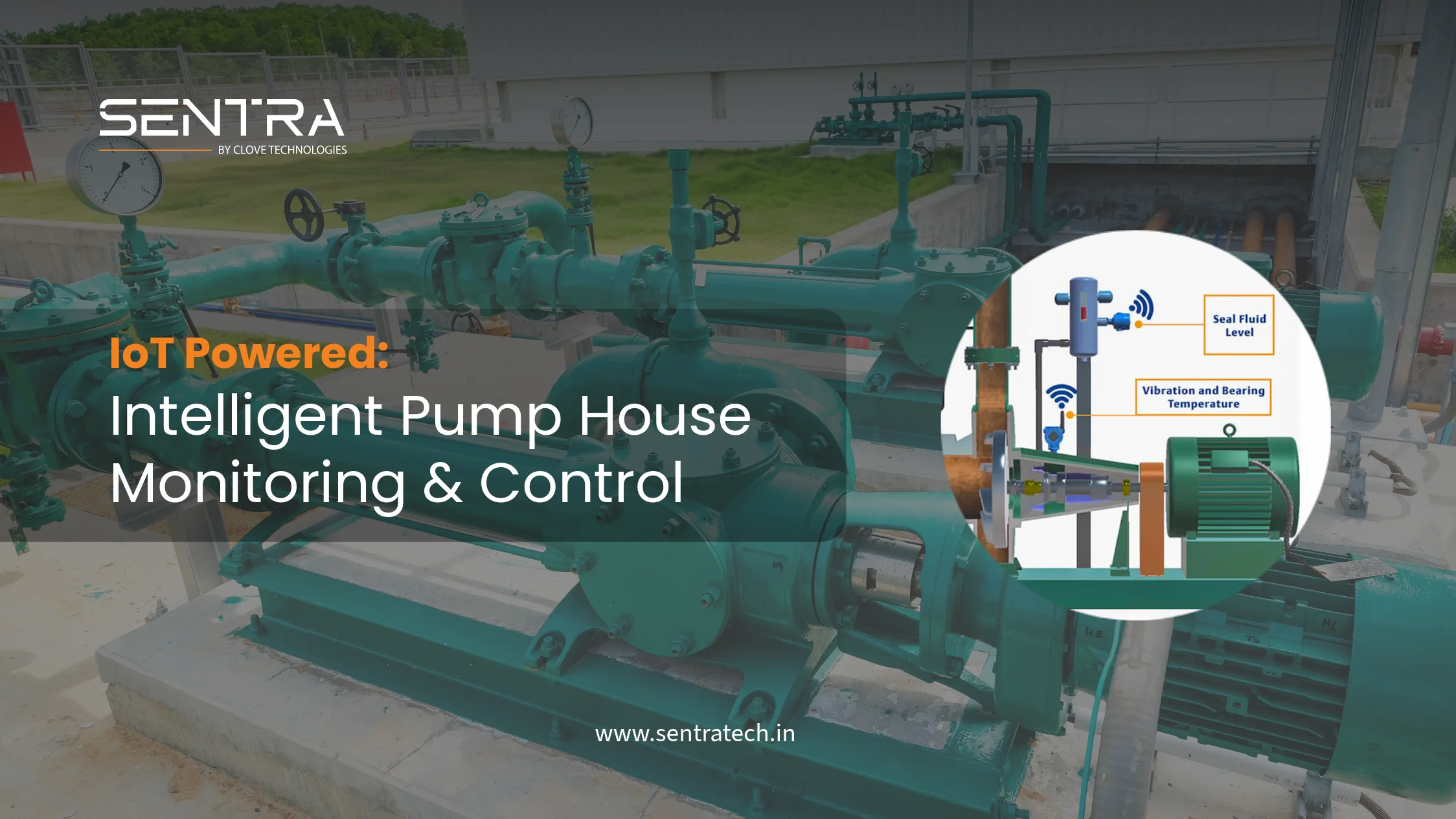
An IoT-enabled pump house ties together flow meters, pressure and water level sensors, energy meters, temperature and vibration sensors, and motor current readings.
Together those show inflow and outflow rates, tank levels, pump efficiency curves, energy use per cubic meter, and how load is shared between pumps. Put it all on one dashboard and a single team can keep an eye on pump houses scattered across a city or an industrial campus from one place.
Vibration Analysis & Predictive Maintenance
Pumps and motors are sensitive to vibration, which is what makes it worth watching. Excess vibration points to bearing wear, shaft misalignment, cavitation, imbalance, or looseness in the structure. Read it continuously and the fault shows up long before the pump fails outright.
Predictive maintenance builds on that. Historical vibration trends, motor current signatures, thermal data, and run time analytics feed machine learning models that pick out the patterns which tend to precede a failure. Crews then go out when something genuinely needs attention, which cuts unplanned downtime and stops maintenance hours being spent on healthy equipment.
Where the 40% Energy Saving Comes From
Pump houses are among the largest electricity consumers in municipal infrastructure. The waste usually traces back to pumps sized bigger than the job needs, full load operation around the clock, and switching done by hand.
A controlled system tunes the Variable Frequency Drives, matches pumping cycles to actual demand, and spreads load across the pumps that are available. Energy analytics flag inefficiency while it is happening rather than at the end of the billing month. That is where the reduction of up to 40% in energy consumption comes from, and the smaller carbon footprint with it.
Remote Control, GIS & Digital Twin Integration
Operators can start and stop pumps remotely, change pressure, and leave schedules to run on their own. Tie the system into GIS and a digital twin platform and every pump is geo-tagged with its pressure zone mapped out. You can then push the twin through demand surges, equipment failures, and flood scenarios before any of them happen for real, which is what makes it useful for planning water supply in a city that keeps growing. For a deeper technical breakdown, see our guide on intelligent pump house monitoring and control.
Optimize Your Water Infrastructure
Getting water where it needs to go is one problem. Doing it without burning extra power or losing pumps to preventable faults is another. If you want to see what continuous monitoring would look like across your pump houses, get in touch with us.
Contact us