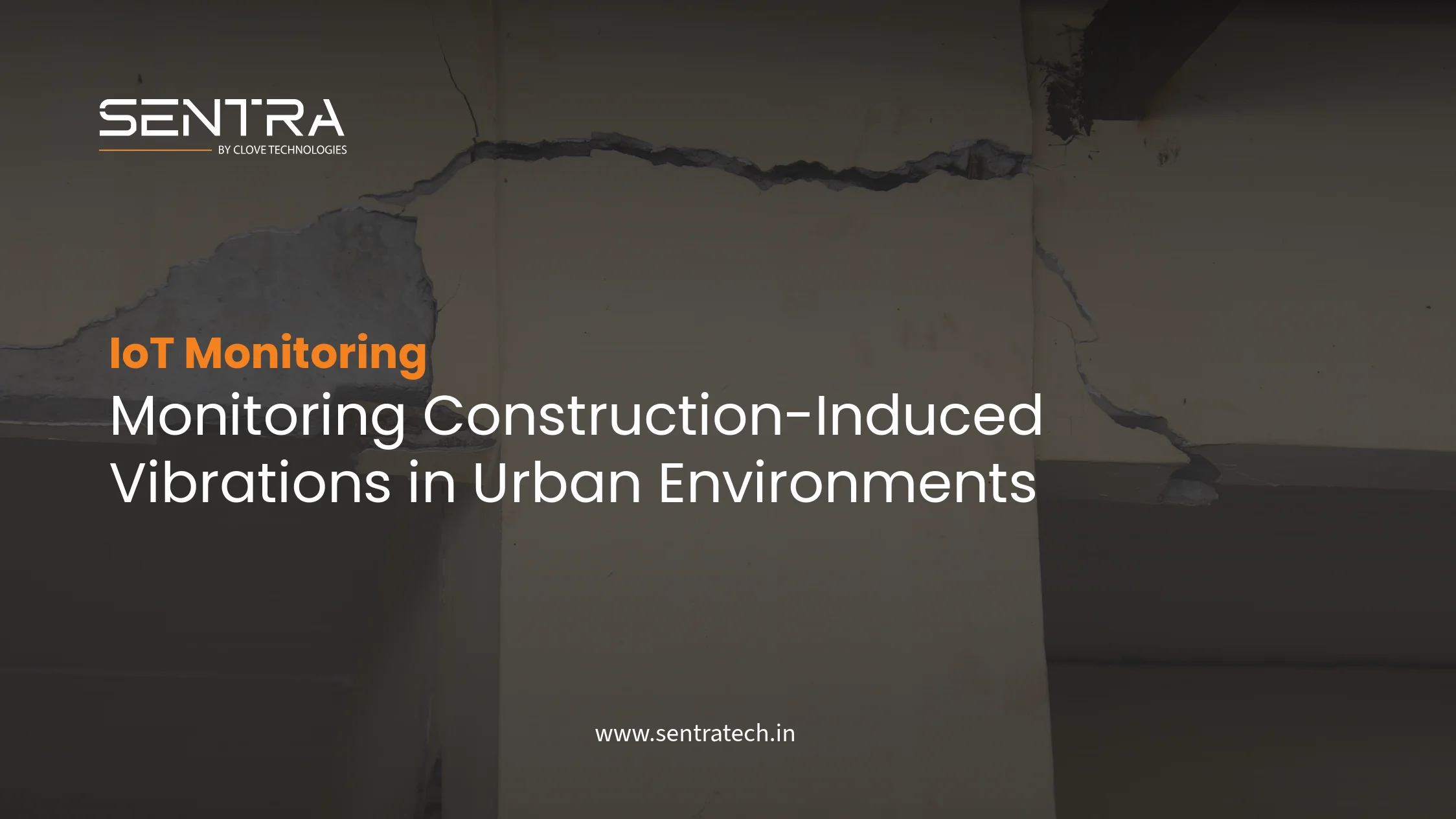
Urban development is accelerating worldwide. From subway expansions and high-rise foundations to bridge demolition and tunnelling, construction activities generate vibrations that propagate through the ground and into neighbouring structures. Without proper monitoring, these vibrations can cause cosmetic damage, structural cracking, or even catastrophic failure in adjacent buildings.
Why Construction Vibration Monitoring Matters
Vibration monitoring is not merely a regulatory checkbox; it is a critical risk management tool. In dense urban environments, construction sites are often metres away from heritage buildings, hospitals, data centres, and active transport infrastructure. Continuous vibration monitoring provides:
- Real-time compliance: Instant alerts when vibration thresholds are exceeded, enabling immediate corrective action.
- Legal protection: Documented vibration data serves as evidence in the event of damage claims or disputes.
- Community confidence: Demonstrates proactive stewardship of the surrounding built environment.
- Optimized operations: Allows contractors to adjust methods and equipment to reduce vibration levels without halting work.
Key Sources of Construction Vibrations
Different construction activities produce distinct vibration signatures. Understanding the source helps in selecting the right monitoring strategy:
- Pile driving: Impact or vibratory pile driving generates high-energy, low-frequency vibrations that travel long distances.
- Demolition: Mechanical breakers, implosions, and wrecking balls produce impulsive, high-amplitude vibrations.
- Tunnelling: Tunnel boring machines (TBMs) create continuous, low-level vibrations with potential for settlement. Learn about our tunnelling monitoring solutions.
- Compaction and grading: Rollers and compactors generate sustained surface vibrations.
- Blasting: Controlled explosions produce transient, high-frequency vibrations requiring specialised monitoring.
Regulatory Standards and Thresholds
Most jurisdictions define vibration limits based on peak particle velocity (PPV) measured in millimetres per second (mm/s). Common thresholds include:
- Heritage and sensitive buildings: 2 to 5 mm/s PPV
- Residential buildings: 5 to 10 mm/s PPV
- Commercial and industrial structures: 10 to 25 mm/s PPV
- Buried utilities and pipelines: 15 to 50 mm/s depending on material and condition
Continuous monitoring ensures that these thresholds are never exceeded without the project team being notified instantly.
IoT-Based Vibration Monitoring Systems
Traditional vibration monitoring relied on periodic data loggers that required manual retrieval. Modern IoT-based systems (such as those deployed by Sentra) provide:
- Wireless accelerometer networks: Deploy tri-axial accelerometers at critical locations on adjacent structures.
- Edge processing: Real-time FFT analysis at the sensor node reduces data transmission and enables instant alerting.
- Cloud dashboard: Engineers monitor all vibration data from a single web-based platform with configurable threshold alerts.
- Automated reporting: Daily, weekly, or per-event reports generated automatically for stakeholders and regulators.
Sensor Placement Best Practices
Effective vibration monitoring depends on strategic sensor placement. Key guidelines include:
- Place sensors at foundation level of adjacent structures: ground-borne vibrations are most accurately measured at the building-to-ground interface.
- Install sensors at multiple elevations on taller buildings to capture structural amplification effects.
- Position sensors along the expected vibration transmission path between the construction activity and the nearest receptors.
- Deploy reference sensors at a distance from the construction site to measure ambient vibration levels for baseline comparison.
Data Analysis and Interpretation
Raw vibration data must be processed into actionable insights. Key analysis techniques include:
- Peak particle velocity (PPV): The most widely accepted metric for assessing structural damage risk.
- Frequency analysis: Low-frequency vibrations (below 10 Hz) pose greater risk to structures than high-frequency vibrations at the same PPV.
- Dominant frequency tracking: Shifts in dominant frequency can indicate changes in soil-structure interaction or the onset of structural damage.
- Cumulative energy: For prolonged construction activities, cumulative vibration energy can be correlated with fatigue accumulation in adjacent structures.
Case Study: Urban Tunnel Construction Monitoring
During a recent tunnel boring project beneath a major metropolitan area, Sentra deployed a network of 24 wireless vibration sensors on adjacent heritage buildings and utilities. The system operated 24/7 for 18 months, generating over 2 million data points. Real-time alerts enabled the contractor to adjust TBM advance rates three times during the project, preventing any damage claims and maintaining community relations throughout the construction period.
Protect Your Urban Construction Project
Whether you are breaking ground on a new high-rise or tunnelling beneath a historic district, continuous vibration monitoring protects your project, your neighbours, and your reputation. Contact Sentra to design a monitoring plan tailored to your site.
Contact us