
Asset Monitoring & Management
Transform reactive maintenance into predictive intelligence — real-time asset health visibility, predictive failure alerts, and lifecycle dashboards across every site you operate.
Real-Time Intelligence Across Every Asset
Sentra's IoT-native asset monitoring platform connects your physical assets to a cloud analytics layer that predicts failures, optimises maintenance, and extends equipment life.
From Reactive Firefighting to Predictive Control
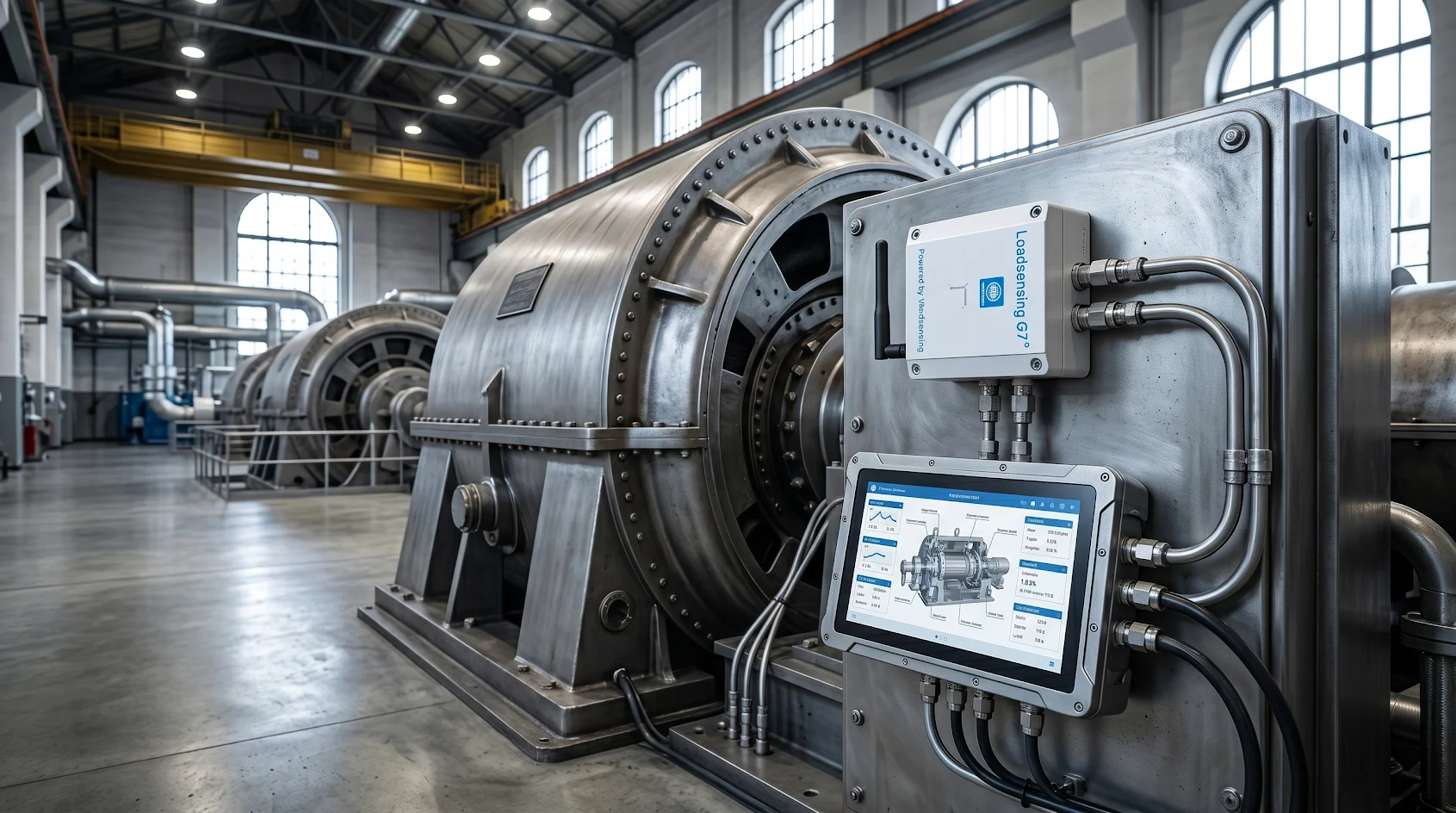
Most industrial and infrastructure operations still manage equipment reactively — maintaining on fixed schedules or responding to failures after they happen. Both approaches are wasteful: scheduled maintenance replaces components before they are worn, and reactive repair means unplanned downtime at the worst possible time. Sentra's Asset Monitoring and Management solution deploys IoT sensors — vibration, temperature, pressure, flow, power, and environmental — on critical assets, transmits data continuously via edge-processing gateways, and presents real-time health status, trend analysis, and predictive maintenance alerts through a multi-asset dashboard accessible from any device. Our platform integrates with your existing CMMS, ERP, and SCADA systems, enriching the data your maintenance team already has with continuous condition intelligence. The result is maintenance that happens at the right time — not too early, not too late — driven by the actual condition of each individual asset.
Composite health scores for each monitored asset, aggregating sensor data into a clear condition rating that maintenance teams can act on without needing to interpret raw sensor signals.
High-frequency vibration sensors and temperature probes detect bearing wear, imbalance, misalignment, and thermal anomalies — the earliest indicators of rotating equipment deterioration.
Continuous pressure and flow monitoring on pipelines, pump systems, and hydraulic circuits detects leaks, blockages, cavitation, and pump efficiency degradation before they cause system failures.
Motor and drive power monitoring identifies increased energy draw — a key early indicator of mechanical deterioration, misalignment, or overload — before visible symptoms appear.
Cycle counting and runtime accumulation on pumps, compressors, valves, and mechanical systems enables true condition-based maintenance intervals based on actual usage rather than calendar time.
Ambient temperature, humidity, and corrosive gas monitoring protects sensitive electrical equipment and helps correlate environmental conditions with asset performance trends.
Measurable Outcomes
Quantifiable results delivered through our monitoring and engineering solutions across infrastructure projects.
Track Record
Proven deliveryEfficiency Gains
Optimised operationsReliability
Always onHow It Works
A proven methodology from asset inventory through to lifecycle reporting and predictive maintenance.
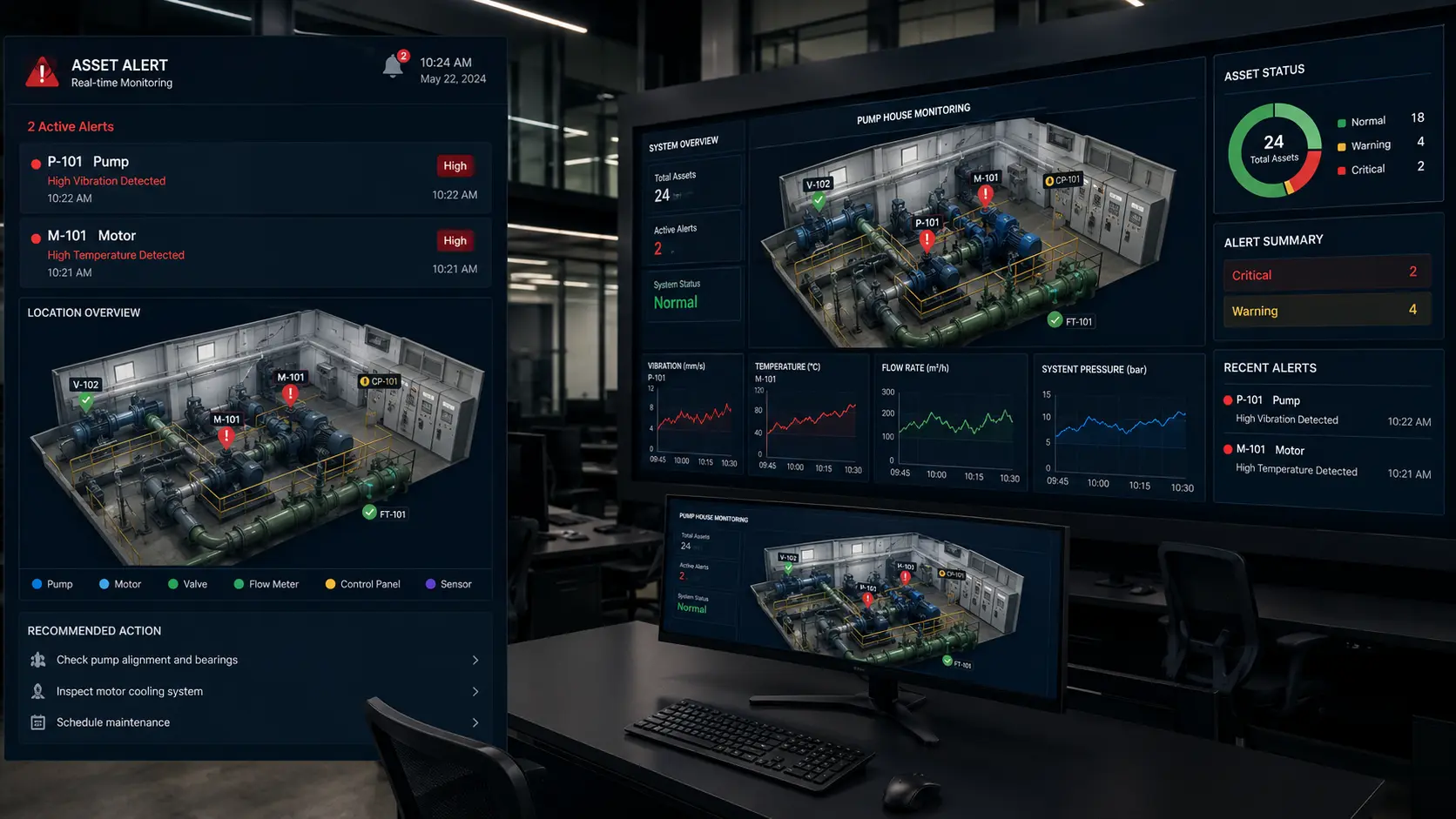
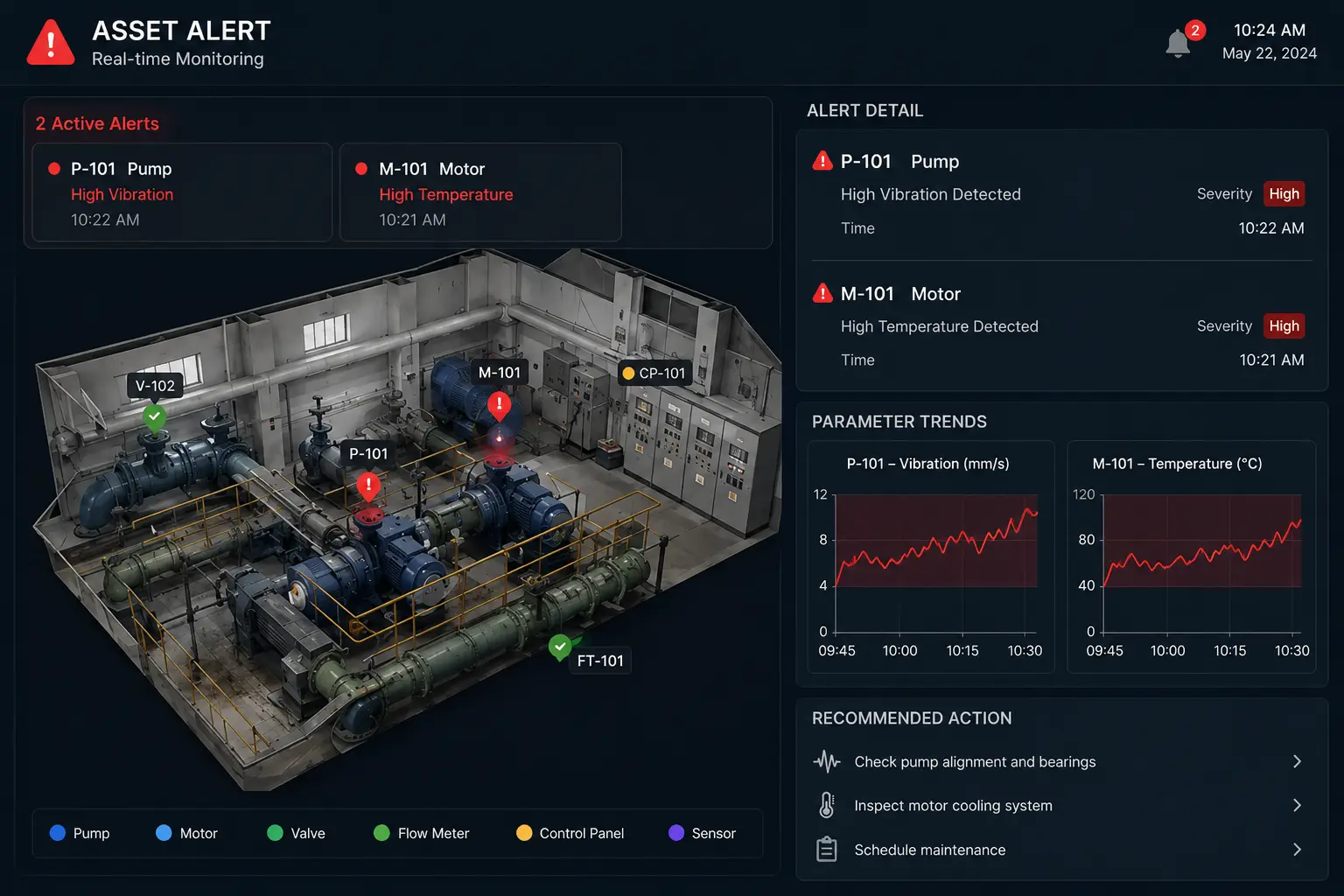

See Our Solutions in Action
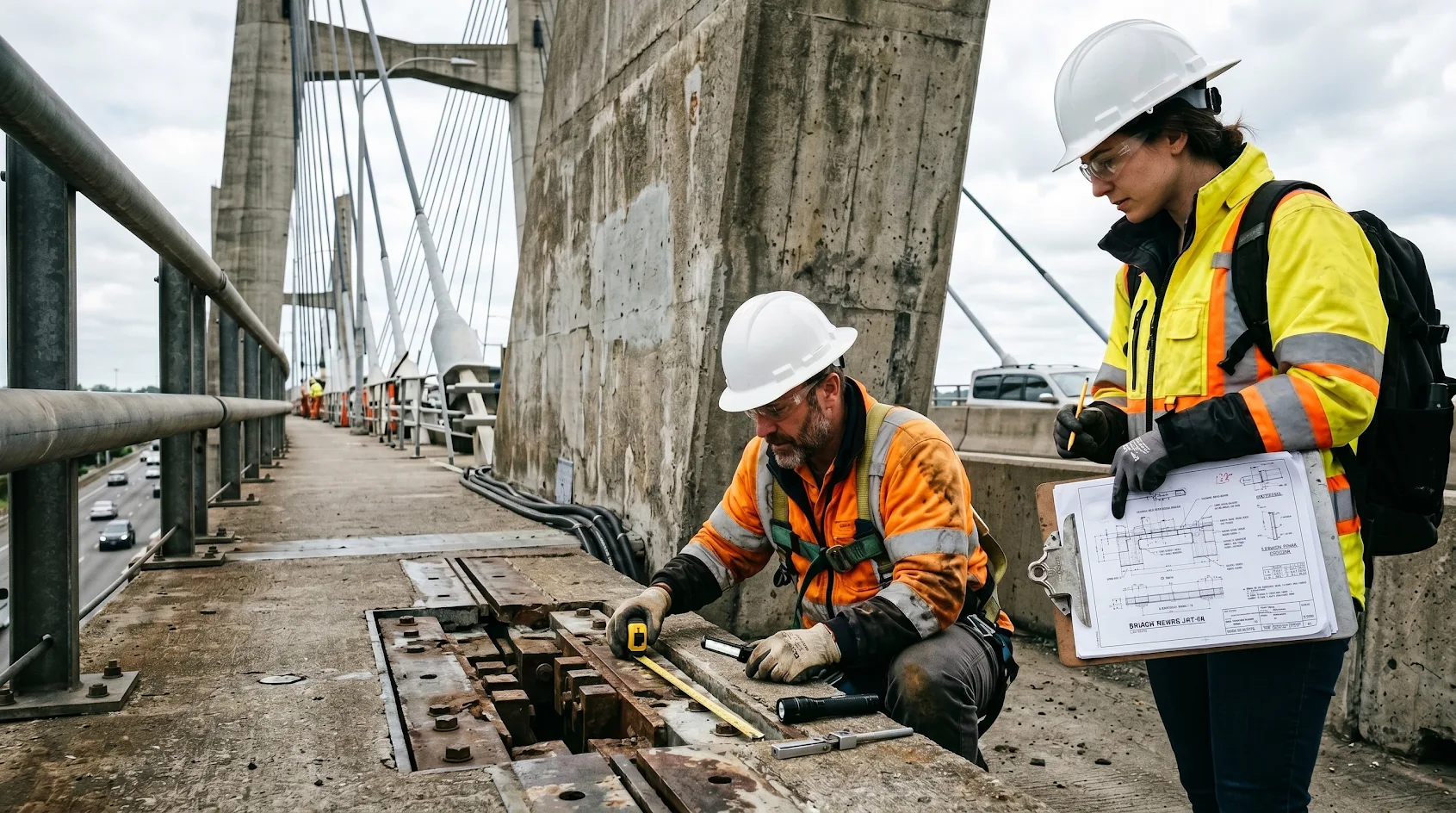
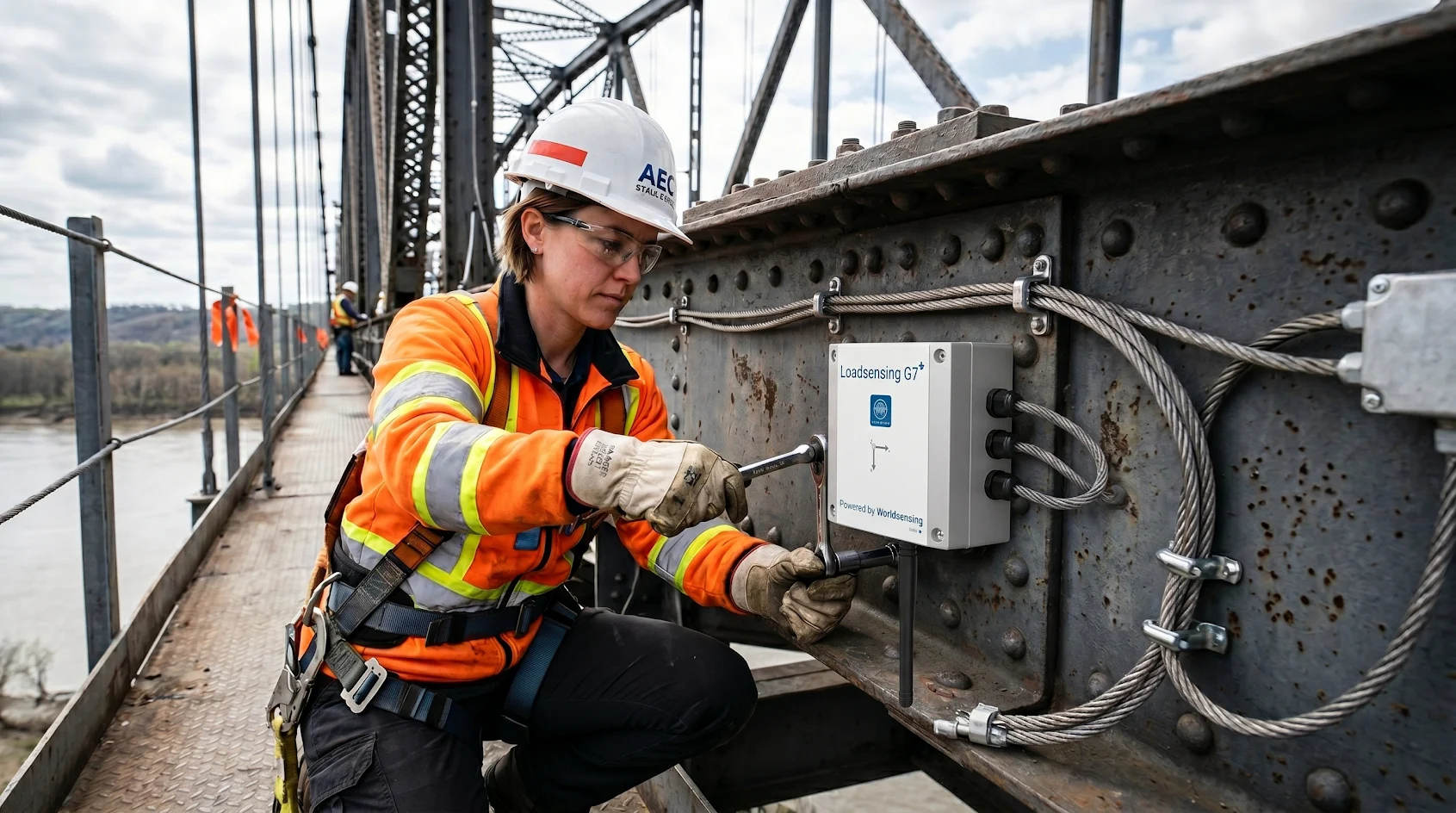
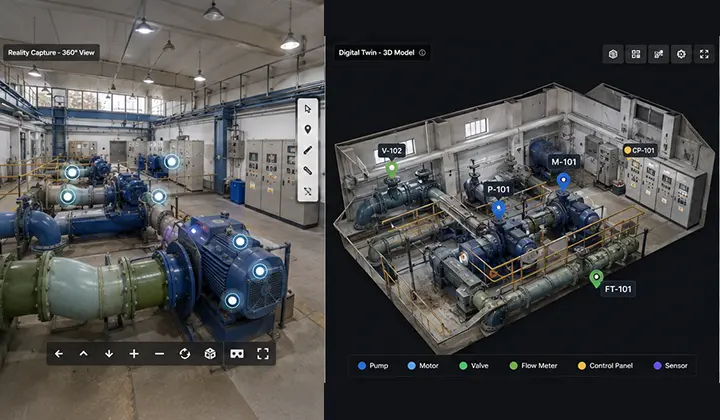
Real deployments, real impact — from field instrumentation to command centre dashboards.
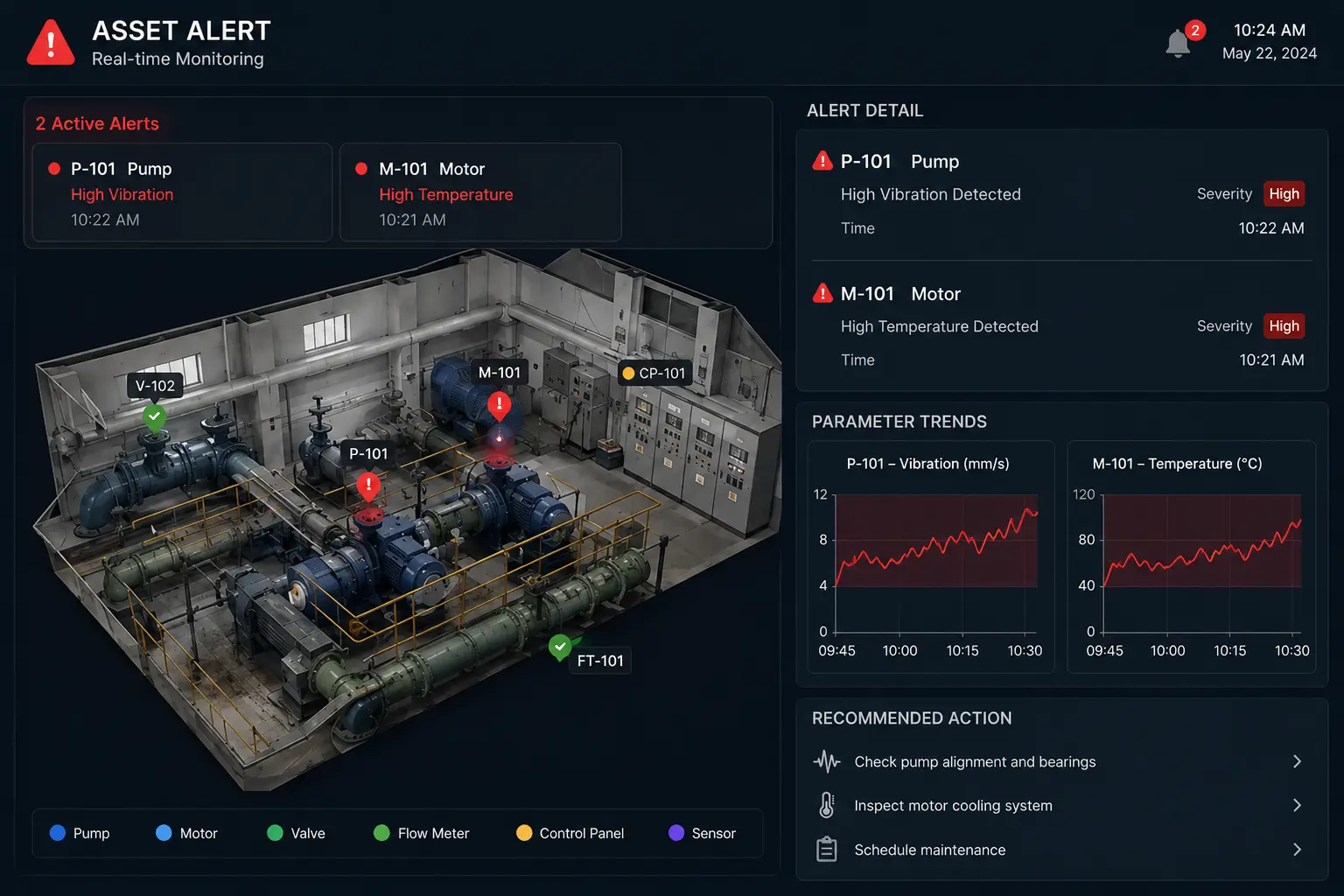




Facility Management, Delivered
Asset monitoring extends naturally into facility management — centralising equipment health, energy use, and building systems into a single operational view.
How It Helps Your Organisation
Moving from reactive to predictive maintenance delivers measurable improvements in uptime, cost, safety, and asset utilisation.
What It Prevents
The hidden costs of reactive and over-scheduled maintenance add up fast. Asset monitoring eliminates the waste and risk that come with flying blind.
Industries We Serve
Wherever critical rotating, static, or process equipment needs to keep running, Sentra's asset monitoring platform delivers the visibility to manage it proactively.
Why Choose Sentra
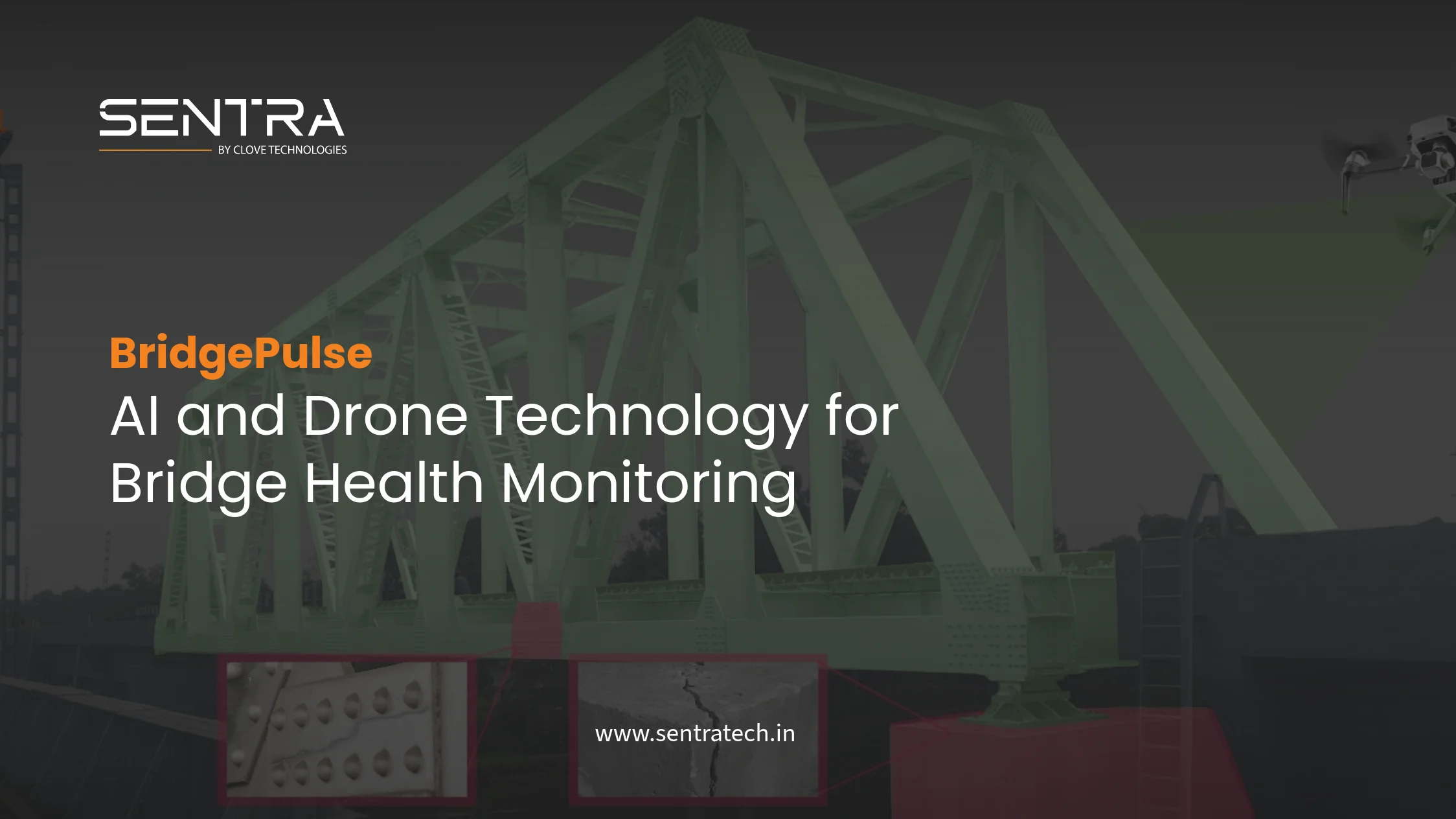
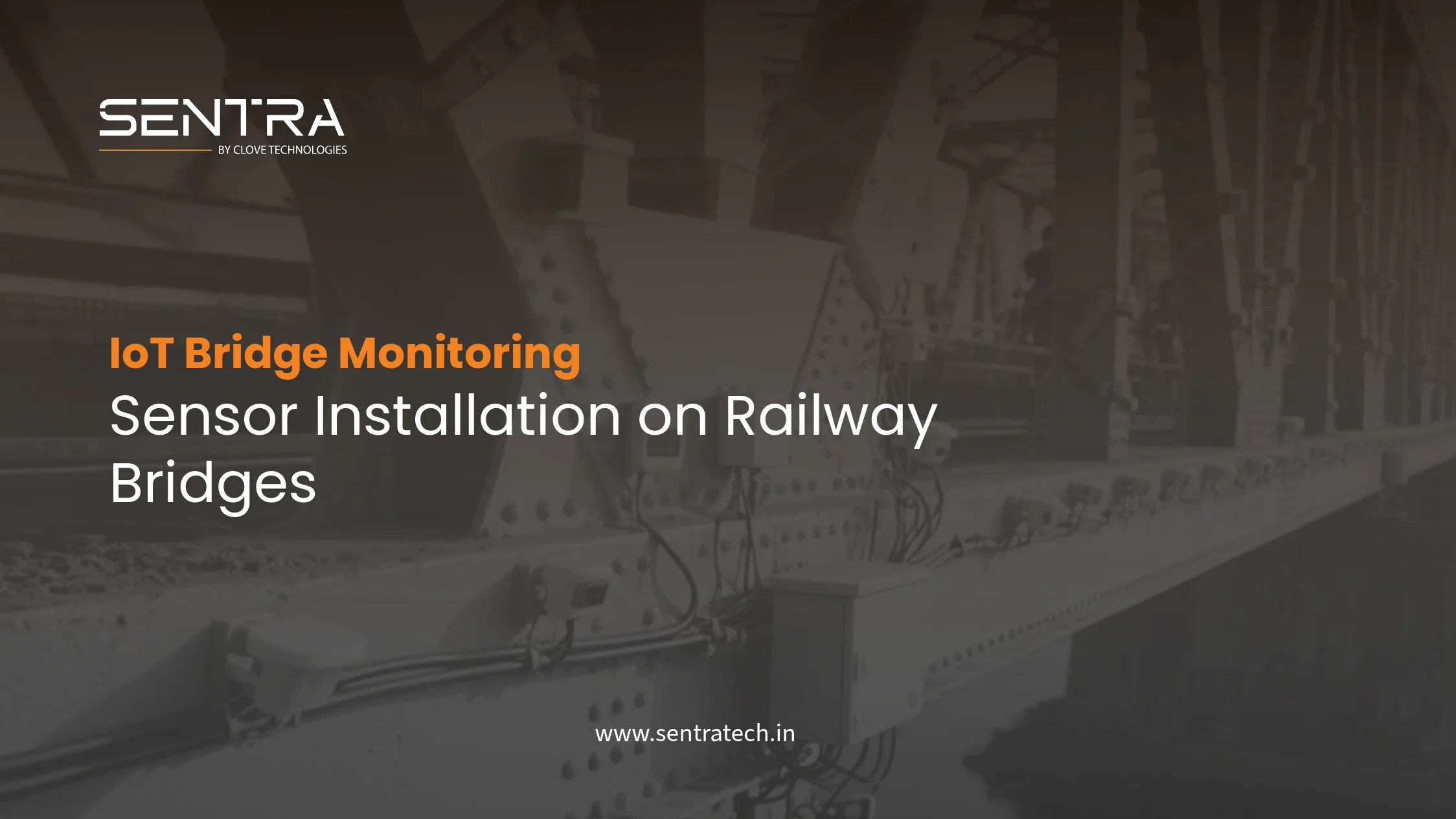
Asset Monitoring in Practice
Real-world IoT sensor deployments delivering predictive maintenance and asset intelligence.
Related Solutions
Other services that complement asset monitoring and management.
Frequently Asked Questions
Can't find what you're looking for? Contact our team — we're happy to help.
Traditional preventive maintenance replaces or services equipment on fixed time or cycle intervals — regardless of actual condition. Asset monitoring provides continuous real-time visibility of each asset's health, enabling maintenance to be triggered by actual condition rather than arbitrary schedules. This avoids replacing healthy components too early and catches deteriorating components before they fail — delivering lower cost and higher reliability than either time-based or reactive maintenance.
A standard deployment covering 20–50 critical assets typically takes 4–8 weeks from site survey to live monitoring dashboard. This includes asset inventory, sensor selection, installation, data integration, baseline collection, and alert configuration. Larger or more complex multi-site deployments are phased over a longer programme. We provide a detailed project schedule before commencing work.
Yes. The Sentra monitoring platform is designed for integration with leading CMMS platforms (Maximo, SAP PM, Infor EAM) and ERP systems via standard APIs and data connectors. Monitoring alerts can automatically create work orders in your CMMS, and maintenance records from your CMMS can be correlated with sensor data in the Sentra dashboard. Custom integration with non-standard systems is available through our engineering team.
Our edge processing units have local data storage that buffers sensor data during connectivity outages — typically 30–90 days of storage capacity depending on sampling rates and sensor count. When connectivity is restored, buffered data is automatically synchronised to the cloud. Critical threshold alerts on the edge unit can also be configured to trigger local alarms independently of cloud connectivity.
Our platform can monitor a wide range of asset types including: rotating equipment (pumps, motors, fans, compressors, gearboxes), static equipment (vessels, tanks, heat exchangers), pipeline systems, electrical equipment (transformers, switchgear), civil structures (buildings, bridges, retaining walls), and environmental monitoring stations. The appropriate sensor suite varies by asset type — our engineers specify the right instrumentation for each application.
Alert accuracy improves over time as predictive models learn each asset's specific behaviour. During the initial 4–8 week baseline period, alerts are primarily threshold-based. As the AI models accumulate asset-specific data, predictive alerts typically achieve 70–85% accuracy for failure prediction within a 2–4 week horizon for common rotating equipment failure modes. False alarm rates are actively managed through threshold tuning and model refinement as part of our ongoing support service.